Looking for a reliable natural sweeteners list that goes beyond marketing claims? Whether you're trying to reduce sugar, manage blood sugar, bake healthier recipes, or source ingredients for food manufacturing, choosing the right sweetener can be confusing.
Some natural sweeteners contain calories and affect blood glucose, while others provide sweetness with little to no glycemic impact.
This natural sweeteners list compares the 10 most popular sugar alternatives based on sweetness, calories, glycemic index, taste, baking performance, and best use cases.
You'll also learn the difference between natural and artificial sweeteners, how to choose the right option, and which ingredients work best for weight management, diabetes-friendly products, and commercial food applications.
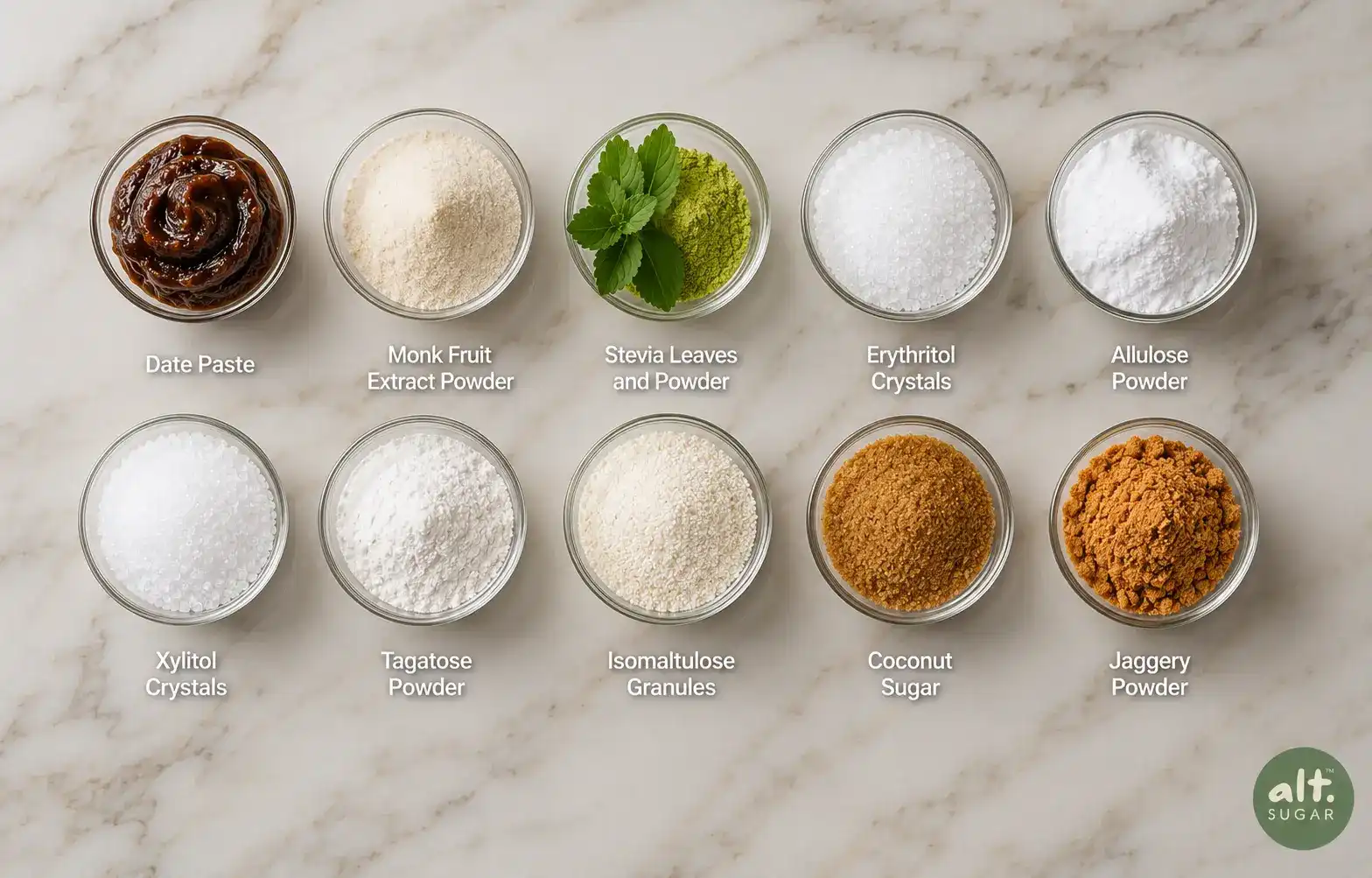
A Fast Comparison Before We Go Deeper
Treat these numbers as a guide, not gospel. Sweetness, calories, and glycemic index can vary depending on purity, processing, formulation, and, for natural sweeteners, crop variety and harvest conditions.
What Actually Counts as a Natural Sweetener?
Ask ten people this question and you'll get ten different answers, most of them wrong in some small way.
The loose definition goes something like this: anything sweet pulled from a plant or fruit source, without heavy synthetic alteration, earns the "natural" tag. Fine, in theory. In practice, the line blurs almost immediately. Stevia leaf doesn't arrive in your kitchen straight off the plant; it passes through extraction and purification first.
Erythritol gets fermented from corn starch in an industrial setting, and yet that exact molecule also turns up naturally, in trace amounts, inside pears and melons. So is it natural or not? Depends who you ask, and which regulator's paperwork you're reading. FSSAI in India and the FDA in the US don't even apply the same standard to every sweetener on this list, let alone to each other.
Here's what most nutritionists do agree on. Natural sweeteners skip the lab-built synthesis routes used for aspartame or sucralose. A good number of them also come bundled with fiber, minerals, or antioxidants, something refined white sugar has none of.
Why More People Are Choosing Natural Sweeteners
Diabetes rates across India have climbed noticeably over the past decade. Physicians bring up sugar reduction earlier in consultations than they used to, and more directly. That alone would explain part of this shift.
But it's not the whole story. Weight management remains a constant background concern for a huge share of consumers, and added sugar happens to be one of the easiest calorie sources to trim without blowing up an entire diet. Layer onto that a generation reading nutrition labels with genuine scrutiny, partly fueled by health content online, partly because gut health stopped being a wellness buzzword and became something people discuss over dinner.
Food companies feel this from the manufacturing side too. Reformulating with "clean label" ingredients isn't a competitive edge anymore so much as a requirement to stay on the shelf. And export buyers in the Gulf, Europe, and North America now treat sugar-reduced formulations as a baseline expectation rather than a premium feature worth paying extra for.
Types of Natural Sweeteners
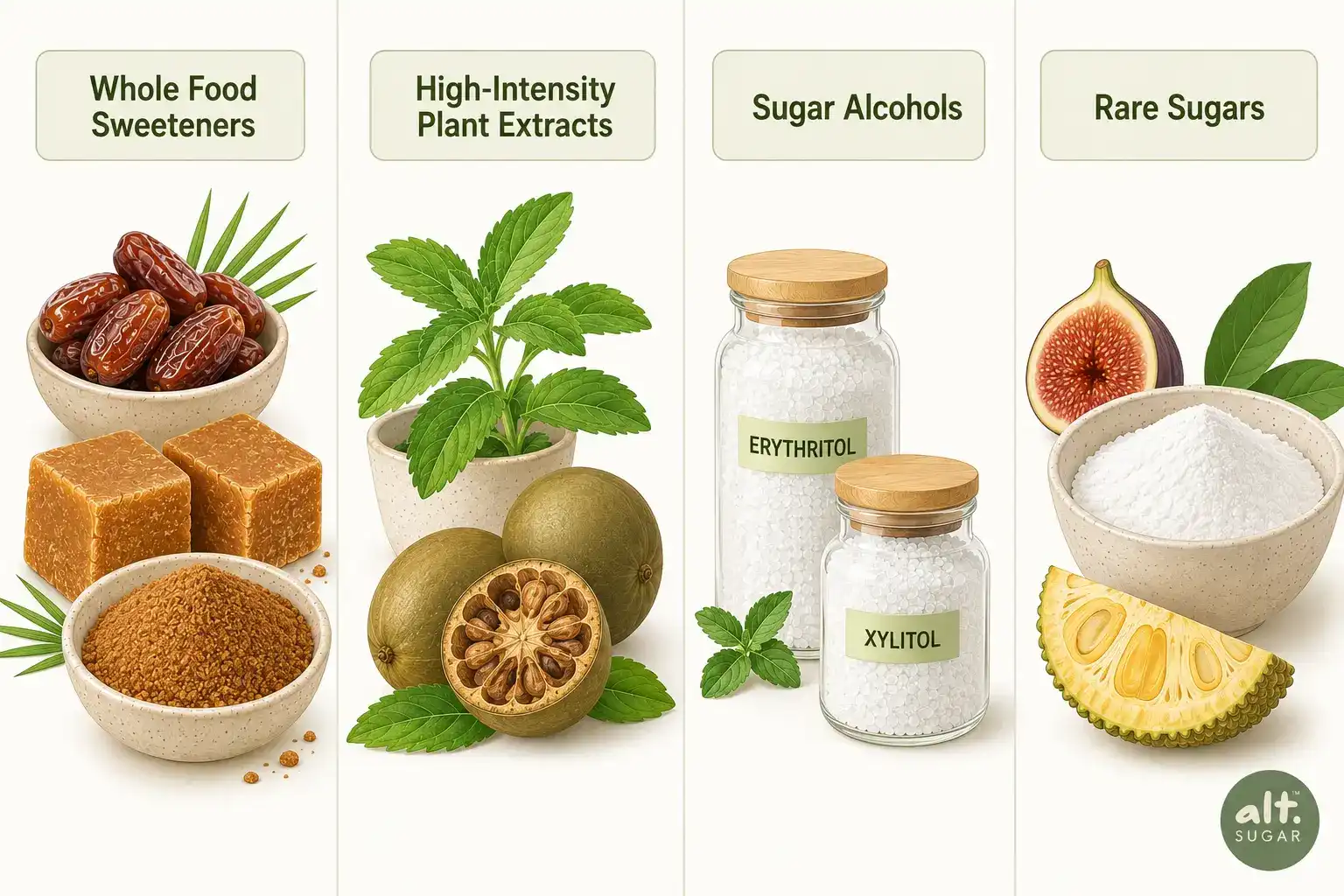
Think of natural sweeteners as falling into four rough camps. Knowing which camp an ingredient belongs to tells you almost everything about how it'll behave once it hits a mixing bowl.
Whole food sweeteners keep most of their original plant structure. Dates, jaggery, and coconut sugar sit in this group, still carrying fiber and minerals from the source material rather than having them stripped away.
High-intensity plant extracts, like stevia and monk fruit, get concentrated down to just the sweet compounds. A pinch does more work than a spoonful of sugar ever could, which is exactly why formulators love them and why they're tricky to use at home without a scale.
Sugar alcohols, or polyols if you want the technical term, include erythritol and xylitol. These are sugar molecules with a slightly altered structure that the body struggles to absorb fully, which is precisely why they carry fewer calories.
Rare sugars cover allulose and tagatose. Both exist naturally in small quantities inside fruit. Both are now produced at commercial scale through enzymatic conversion, because extracting them by hand from fruit peels would be absurdly impractical at any real volume.
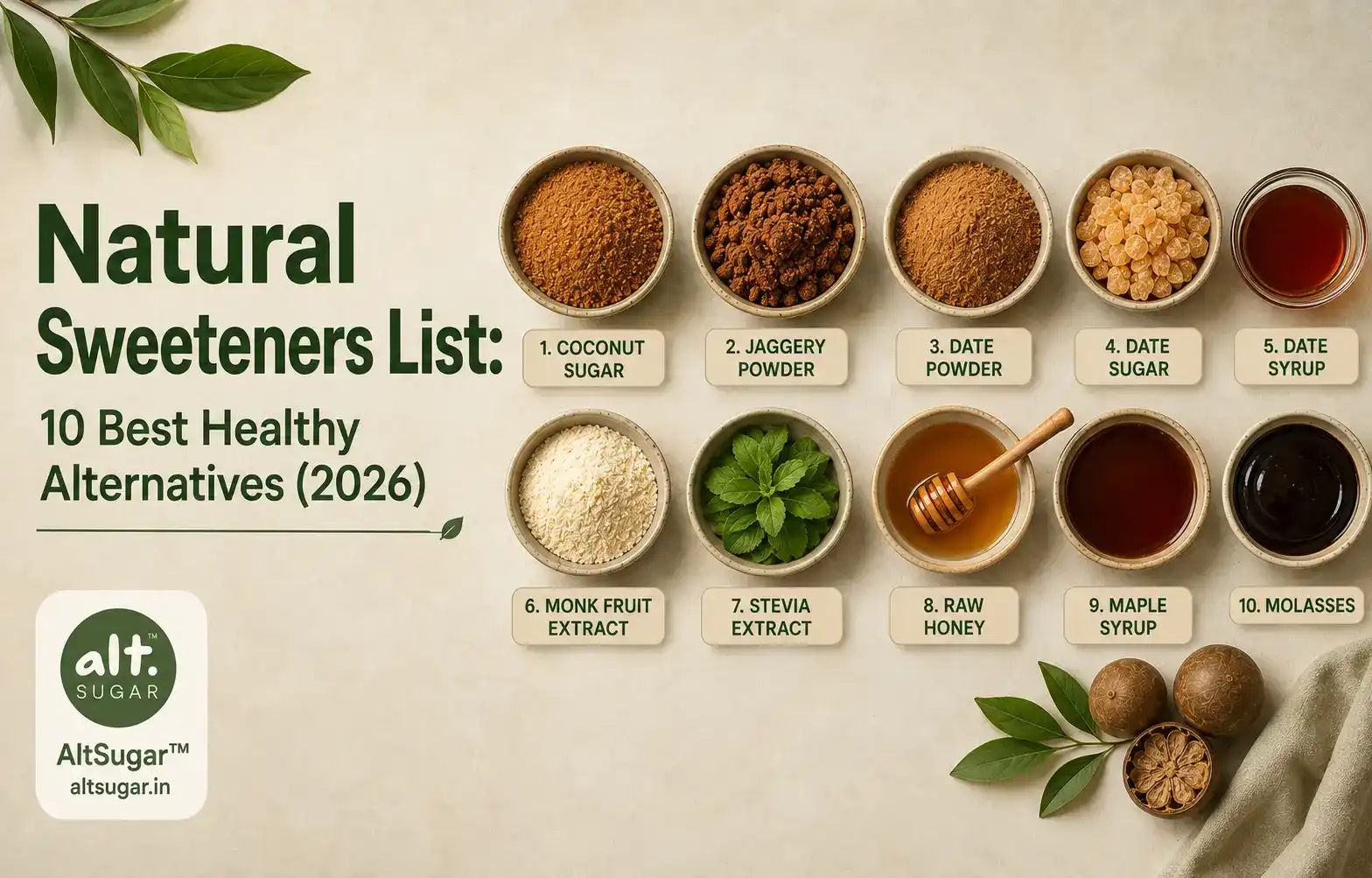
Natural Sweeteners List: 10 Best Healthy Alternatives 2026
Not every sweetener serves the same purpose. Some are ideal for baking, others are better for beverages, while some are preferred for diabetic-friendly or low-calorie products. Below is a detailed natural sweeteners list covering the advantages, disadvantages, nutritional profile, and best applications of each option.
1. Dates: Powder, Paste, and Syrup
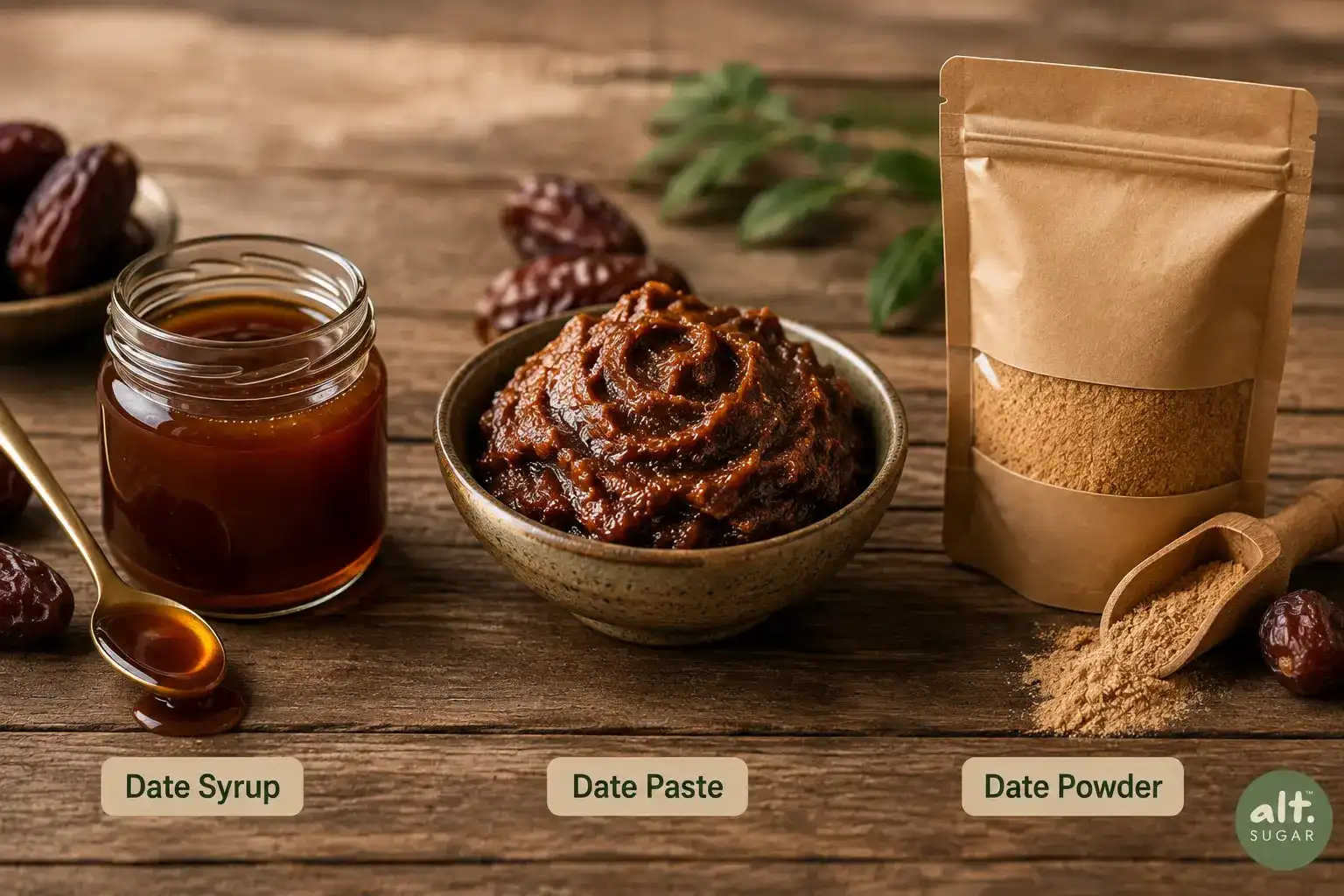
Three commercial forms dominate the date category: powder, made by dehydrating and grinding the fruit; paste, which is the whole fruit blended down; and syrup, a liquid concentrate pressed and reduced from dates.
The flavor sits somewhere between caramel and light molasses, with a fruity note that lingers on the palate longer than you'd expect. There's real nutrition here too. Dates bring potassium, magnesium, and genuine fiber along with their sugar content, so this isn't empty sweetness in the way refined sugar is. That said, they're calorie-dense, and they do move blood sugar, so anyone managing glucose levels should think about portion, not just source.
In practice, date paste earns its keep in energy bars, cookies, and cakes, where it does double duty as sweetener and binder. Powder measures more predictably and mixes cleanly into dry blends or smoothies. Syrup pours easily enough to work in glazes, dressings, or stirred straight into a drink.
Bakeries and energy bar makers lean on dates constantly, and health-focused food brands aren't far behind. India happens to produce and process a serious volume of them domestically, which explains why demand keeps climbing among both startups chasing a clean label and traditional sweet makers who've used dates for generations already.
2. Monk Fruit Extract
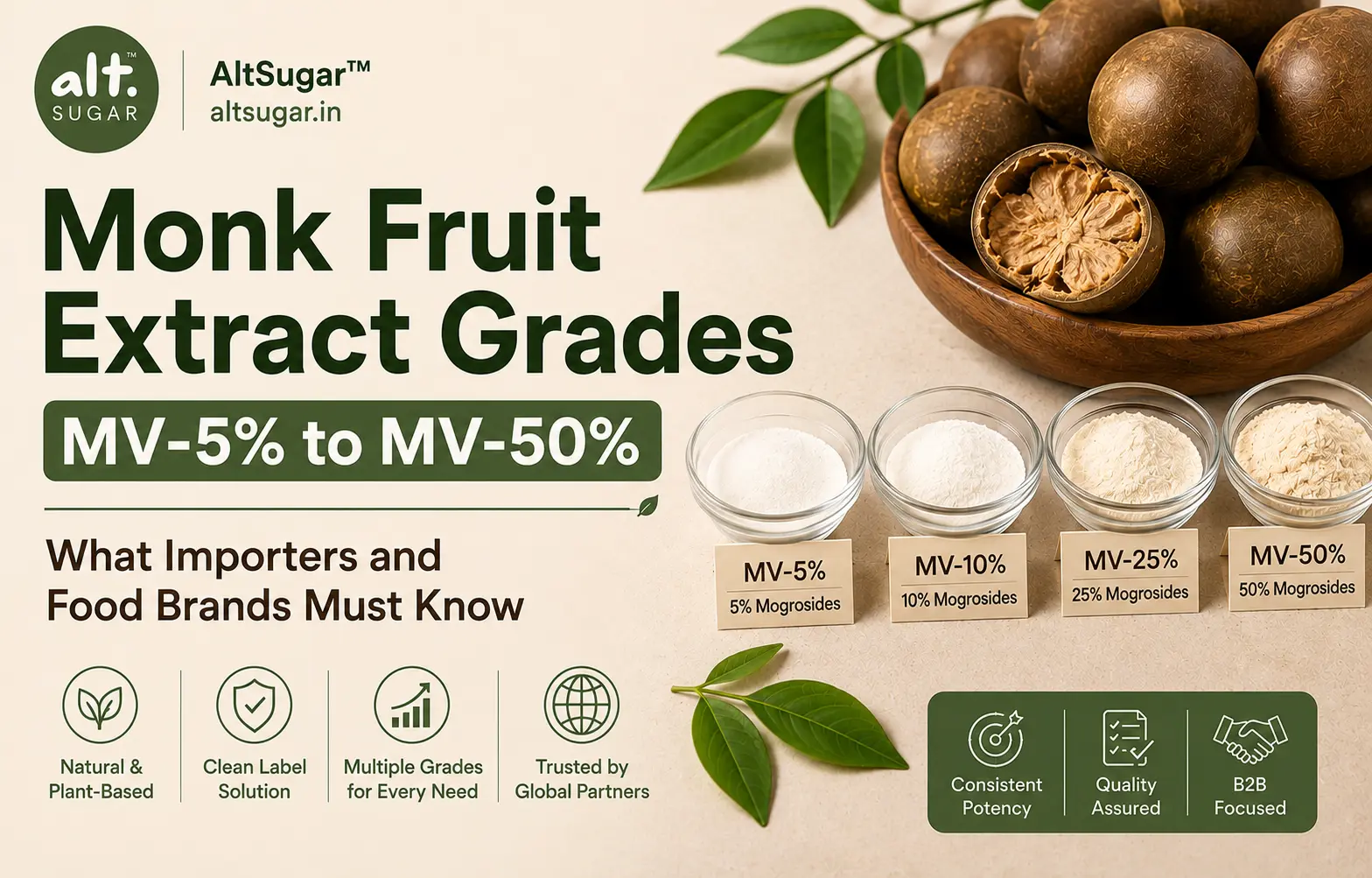
Here's a question worth asking: why does something 250 times sweeter than sugar taste clean rather than overwhelming? The answer lies in mogrosides, the compounds responsible for monk fruit's sweetness, which behave nothing like ordinary sugar molecules once they're inside the body.
Monk fruit, grown mostly in southern China under the name Luo Han Guo, delivers zero calories and doesn't touch blood sugar at all, based on current research, with no known safety concerns at typical usage levels. Taste is generally clean, though a faint aftertaste shows up in some lower-purity extracts, depending on how thoroughly they were processed.
One thing that surprises first-time buyers: pure monk fruit extract is almost never sold on its own for baking. It gets blended with erythritol or allulose to add bulk, since a teaspoon of the pure extract would overpower nearly any recipe you tried it in. In beverages and dressings, where only a whisper of sweetener is needed, the pure form works perfectly well by itself.
Keto brands, diabetic-friendly product lines, and beverage manufacturers reach for it often. In India, though, every gram is imported, mostly from China, and demand from D2C sugar-free brands has been climbing fast enough that suppliers are watching this one closely.
3. Stevia Extract
Stevia has an image problem it's still working through.
Older, lower-purity extracts carried a licorice-like bitterness that turned plenty of people off years ago, and that reputation has stuck around longer than the actual flavor issue has. Higher-purity versions, particularly Reb-A and Reb-M, taste considerably cleaner now, closer to sugar than most people remember. Interestingly, the plant itself, Stevia rebaudiana, native to South America, has been used as a sweetener for generations before it ever landed on a supermarket shelf.
It contributes zero calories and doesn't move blood glucose, which explains why so many diabetic-friendly formulations build around it. It performs well in beverages, yogurt, and sauces. Baking is where it gets tricky, since stevia brings sweetness without any of the bulk that sugar normally provides, so bakers need to add a filler alongside it or the texture falls apart.
Stevia already carries strong name recognition across India, a leftover benefit from years of tabletop sweetener marketing, and high-purity extract remains one of the most requested reformulation ingredients among Indian food manufacturers right now.
4. Erythritol
This one behaves almost like a party trick. Roughly 90 percent of what you eat passes through the body unchanged, which is why it barely registers on a calorie count and doesn't spike blood sugar at all.
Erythritol is a sugar alcohol, produced by fermenting glucose typically sourced from corn starch. Taste comes remarkably close to real sugar, with one giveaway: a cooling sensation on the tongue that grows more noticeable at higher concentrations.
Some recent research has flagged possible cardiovascular concerns at very high intake levels, worth mentioning here, so moderate use is the sensible approach until the science settles further.
In baking, it crystallizes much like sugar does, and it pairs nicely with stevia or monk fruit to smooth over their aftertaste. That's precisely why sugar-free chocolate makers and bakeries use it so constantly. Adoption in India keeps climbing as diabetic-focused food brands scale up, though the ingredient is still mostly sourced from overseas suppliers.
5. Allulose
Ask any pastry chef who's worked with sugar substitutes what frustrates them most, and browning comes up almost immediately. Most substitutes just won't caramelize.
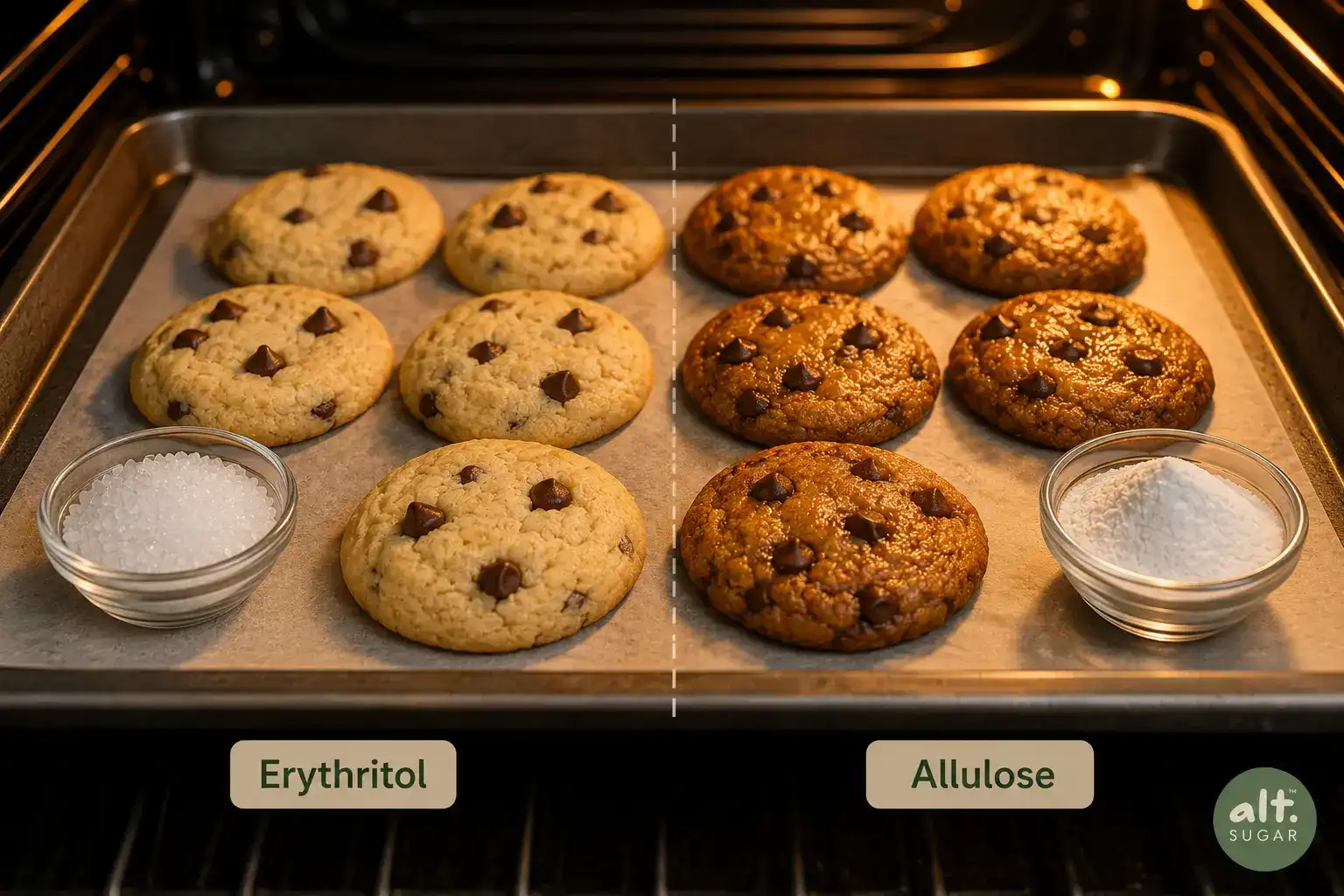
Allulose is the exception, and that's really the whole story with this one. It occurs naturally in tiny amounts inside figs, raisins, and jackfruit, though commercially it's produced through enzymatic conversion of fructose rather than extracted directly from fruit at any meaningful scale. It carries roughly 70 percent fewer calories than sugar, barely moves blood glucose or insulin, and, unlike nearly everything else on this list, browns and caramelizes the way actual sugar does.
That single trait explains why bakers who care about appearance, not just sweetness, gravitate toward it. Premium bakery items, ice cream, and sauces needing real caramelization all benefit. It's newer to the Indian market than most entries here, currently used mostly by specialty and export-oriented manufacturers rather than mainstream retail brands, though that's likely to change as awareness spreads.
6. Xylitol
Long before xylitol showed up in food products, it had already built a career in oral care.
Sourced from birch wood or corn cobs depending on the manufacturer, it matches sugar's sweetness almost one to one, with that same cooling effect erythritol has. It carries a lower glycemic impact than sugar, and it's one of the rare sweeteners with an actual dental upside, since it doesn't feed the bacteria responsible for cavities.
Here's something worth repeating because it genuinely matters: xylitol is highly toxic to dogs, so anything containing it needs clear labeling and careful storage, especially in households with pets.
It substitutes well across most recipes, though it won't caramelize the way allulose does. Chewing gum, mints, and oral care products remain its biggest home, alongside general baking use. Oral care and confectionery manufacturers in India already depend on it, with most current supply arriving through imports.
7. Tagatose
Tagatose doesn't get much attention, and that's a little unfair given what it can do.
It occurs naturally in tiny quantities in dairy, and commercially it's produced by enzymatically converting lactose. The taste sits close to sugar, just a touch less sweet, and it browns in baking much the way sugar does, a nice bonus for such an obscure ingredient.
Its glycemic index runs low, and some research points toward prebiotic benefits that support gut bacteria, though the science here is thinner than what exists for stevia or monk fruit at this point.
Functional foods, nutrition bars, and gut-health-focused products are where it shows up most. In India, it remains a niche ingredient, used mainly by specialty nutraceutical manufacturers rather than mainstream food brands, at least for now.
8. Isomaltulose
Sold commercially under the brand name Palatinose in a lot of markets, isomaltulose comes from sugar beet through an enzymatic process.
It's about half as sweet as sugar, with a clean, unremarkable taste that stays out of the way of other flavors in a product. What matters more than the taste, though, is the digestion speed: the body breaks it down slowly, producing a steadier glucose response instead of a sharp spike, which is exactly why sports nutrition companies favor it for sustained-energy products.
This matters more than most people realize, especially for athletes trying to avoid a mid-workout crash.
It behaves like sugar in most applications, though its lower sweetness means recipes need more of it by volume to hit the same sweetness target. Energy bars and sports drinks use it most, and Indian sports nutrition and functional beverage brands are adopting it at a steady clip.
9. Coconut Sugar
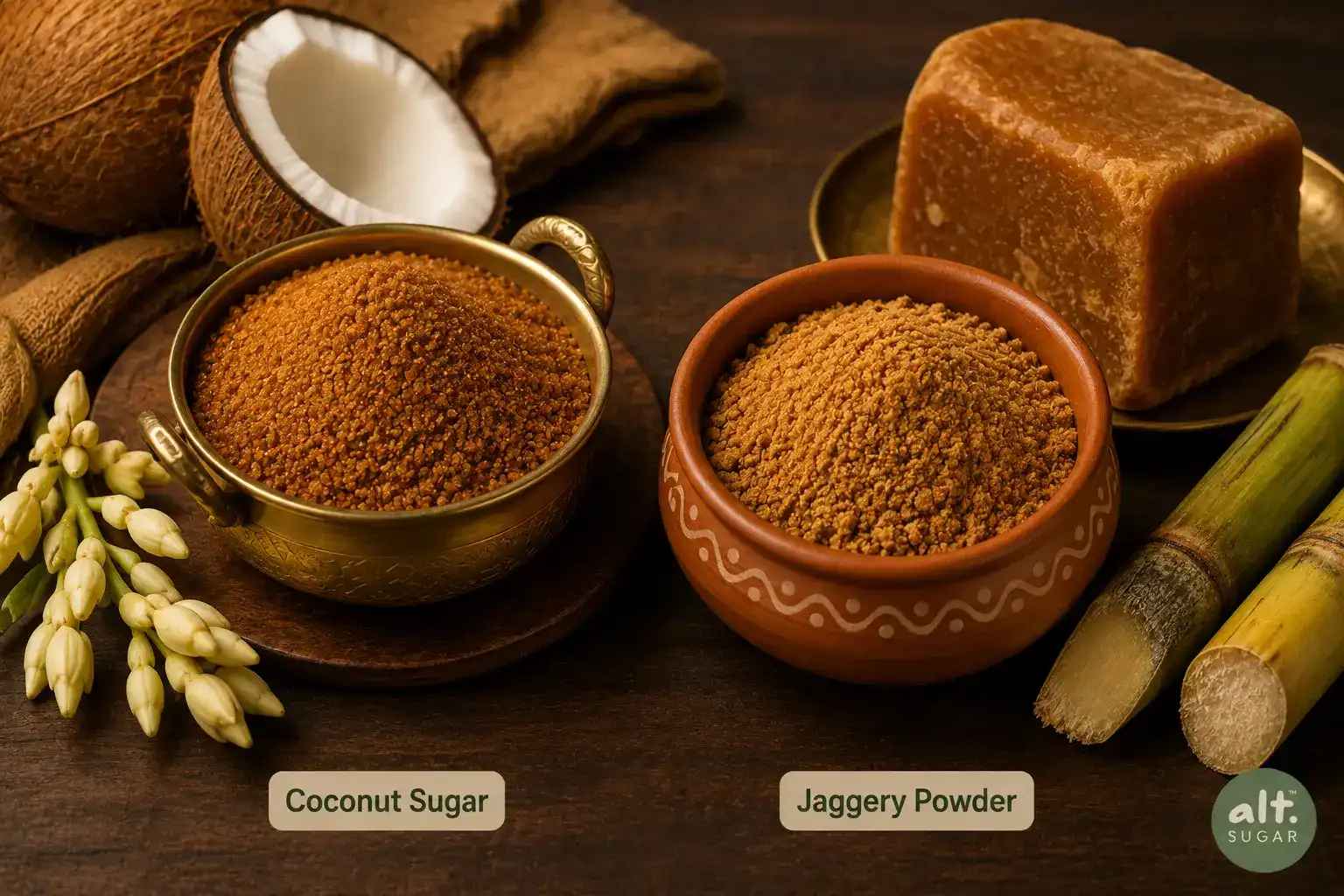
Boil down sap collected from coconut palm flower buds and you get coconut sugar, a process that hasn't really changed in generations.
The flavor lands close to light brown sugar, caramel-forward with a faint earthiness underneath. It carries trace minerals like iron, zinc, and potassium, plus inulin, a fiber that may modestly slow how quickly the body absorbs its sugars.
Here's the part marketing copy tends to skip over: it's still calorie-dense, and it moves blood sugar in a way that's not meaningfully different from regular table sugar, despite the reputation it's earned as a "healthier" swap.
It substitutes one to one for brown sugar almost anywhere, and it works cleanly in cookies, cakes, and sauces. India's strong coconut cultivation base gives it solid domestic production capacity, unlike most of the sweeteners on this list, and demand keeps growing among clean-label and export-focused food brands looking for something homegrown.
10. Jaggery Powder
Long before "natural sweetener" became a marketing phrase, jaggery was already sitting in Indian kitchens, unbothered by any of it.
Made by boiling down either sugarcane juice or palm sap, jaggery carries a deep, molasses-heavy flavor with mineral undertones that refined sugar simply doesn't have. It holds onto iron, magnesium, and small traces of B vitamins lost during standard sugar refining.
It's still calorie-dense, though, and its glycemic index swings widely depending on purity, which quietly undercuts the old assumption that jaggery is automatically gentler on blood sugar than white sugar. It isn't, not always.
Powdered jaggery measures and blends far more easily than a solid block, which is a big part of why it's become the preferred form for modern food manufacturing. It's central to Indian sweets, chutneys, and traditional beverages, and traditional food manufacturers, ayurvedic brands, and export markets chasing authentic Indian ingredients all keep steady demand alive for it.
Which Is the Best Natural Sweetener?
The best natural sweetener depends on your goal. If blood sugar control is your priority, stevia and monk fruit are among the best options because they have virtually no calories or glycemic impact.
For baking, allulose performs most like sugar because it browns and caramelizes naturally. If you prefer minimally processed sweeteners, dates, coconut sugar, and jaggery offer whole-food appeal but still contain calories and carbohydrates.
Natural Sweeteners Against Artificial Ones
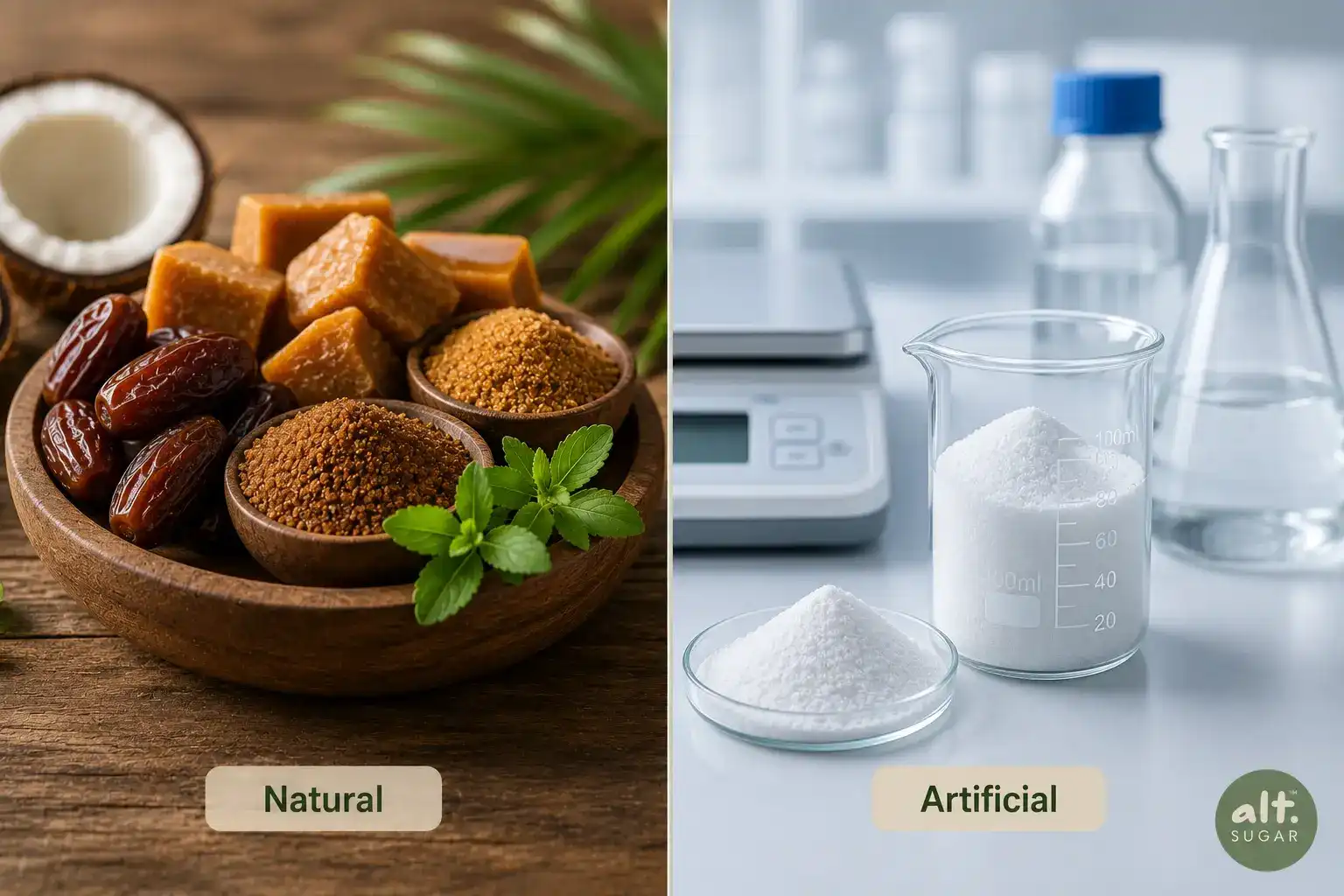
Origin is really the whole ballgame here. Natural sweeteners trace back to plants or fruit with limited chemical alteration. Artificial sweeteners like aspartame, sucralose, and saccharin are built in a lab from the ground up and don't exist anywhere in nature, full stop.
Neither side wins this outright, whatever the marketing on either side wants you to believe. Artificial sweeteners are cheaper and hold up better at industrial scale, plain and simple. Natural sweeteners fit today's label expectations and export requirements far more comfortably, and that's increasingly what's driving purchasing decisions.
Best Natural Sweeteners for Weight Loss
If your goal is weight management, choosing a low-calorie or zero-calorie sweetener can help reduce overall sugar intake without sacrificing sweetness. Stevia, monk fruit, erythritol, and allulose are commonly used in weight-loss-friendly foods because they contribute little or no usable calories. However, sustainable weight loss depends on overall calorie intake, diet quality, and lifestyle-not simply replacing sugar with another sweetener.
But here's the catch few people talk about. Weight loss rarely runs on calorie math alone. Some research suggests that intensely sweet foods, even the calorie-free kind, might keep sugar cravings alive rather than dialing them down over time.
Whole food choices like dates bring fiber that supports fullness, even though they carry real calories worth accounting for. In practice, the more durable approach usually means gradually easing the palate off intense sweetness altogether, not just trading one sweet ingredient for another and eating the same volume anyway.
If diabetes, prediabetes, or another condition is part of your picture, this is worth a conversation with a doctor or dietitian before making major changes. Individual responses to different sweeteners genuinely vary, more than most generic advice online suggests.
How to Choose the Right Natural Sweetener
Baking, or just sweetening a drink? That single question eliminates half the list right away. Allulose and coconut sugar brown and caramelize, so they suit baked goods where appearance matters. Stevia and monk fruit need a bulking partner if baking is the actual goal.
Does blood sugar impact matter to you specifically? Stevia, monk fruit, erythritol, allulose, and tagatose barely register on glucose levels. Dates, coconut sugar, and jaggery all move the needle, sometimes considerably.
Is taste purity non-negotiable for your product or palate? Allulose and erythritol come closest to real sugar. High-purity Reb-M stevia has largely fixed the bitterness that plagued older extracts for years.
What's the finished product actually going to be? Beverages do well with high-intensity extracts like stevia or monk fruit, since a tiny amount goes a long way. Bakery items usually need bulk sweeteners instead, things like erythritol, allulose, or coconut sugar that provide real volume.
Working with a tight budget? Jaggery and coconut sugar cost noticeably less than imported specialty options like monk fruit or tagatose, and that gap isn't closing anytime soon given current import dynamics.
A Few Myths Worth Retiring
"Natural means it won't touch blood sugar." Wrong, and this one causes real confusion. Jaggery, coconut sugar, and dates all raise glucose, sometimes sharply, despite being unrefined.
"Sugar alcohols are artificial." Not quite. Erythritol and xylitol occur naturally in small amounts inside fruits and vegetables, even though commercial batches come from fermentation rather than fruit peeling.
"Stevia always tastes bitter." That was a fair complaint a decade ago. High-purity Reb-A and Reb-M formulations have mostly resolved it since.
"Zero-calorie sweeteners are safe in any amount." Most are fine within recommended limits. Overdoing any sweetener, natural or not, still isn't a great idea, and that's true regardless of what the packaging implies.
Are Natural Sweeteners Safe?
Most natural sweeteners approved by food safety authorities are considered safe when consumed within recommended limits. However, tolerance varies from person to person.
Sugar alcohols such as erythritol and xylitol may cause digestive discomfort when consumed in excess, while people with diabetes or other medical conditions should consult a healthcare professional before making significant dietary changes.
How These Sweeteners Get Used, Industrially and at Home
The State of Demand in India
Three forces are pulling India's natural sweetener market forward at once: wider diabetes awareness, a booming D2C health food scene, and export buyers who simply won't accept anything but clean-label formulations anymore.
Jaggery and coconut sugar have a natural advantage here, since domestic production infrastructure already exists for both, built up over decades rather than years. High-intensity sweeteners like stevia and monk fruit, plus rare sugars like allulose and tagatose, still depend heavily on imports, and that dependency shapes pricing more than most buyers realize.
The fastest-growing buyers right now are food manufacturers reformulating existing product lines, nutraceutical companies building sugar-free supplement ranges, and export-focused brands chasing shelf space in the Gulf, US, and European markets simultaneously.
What Buyers Sourcing in Bulk Actually Care About
Price matters, obviously. But talk to anyone who's bought these ingredients at real volume, and price drops surprisingly far down the priority list.
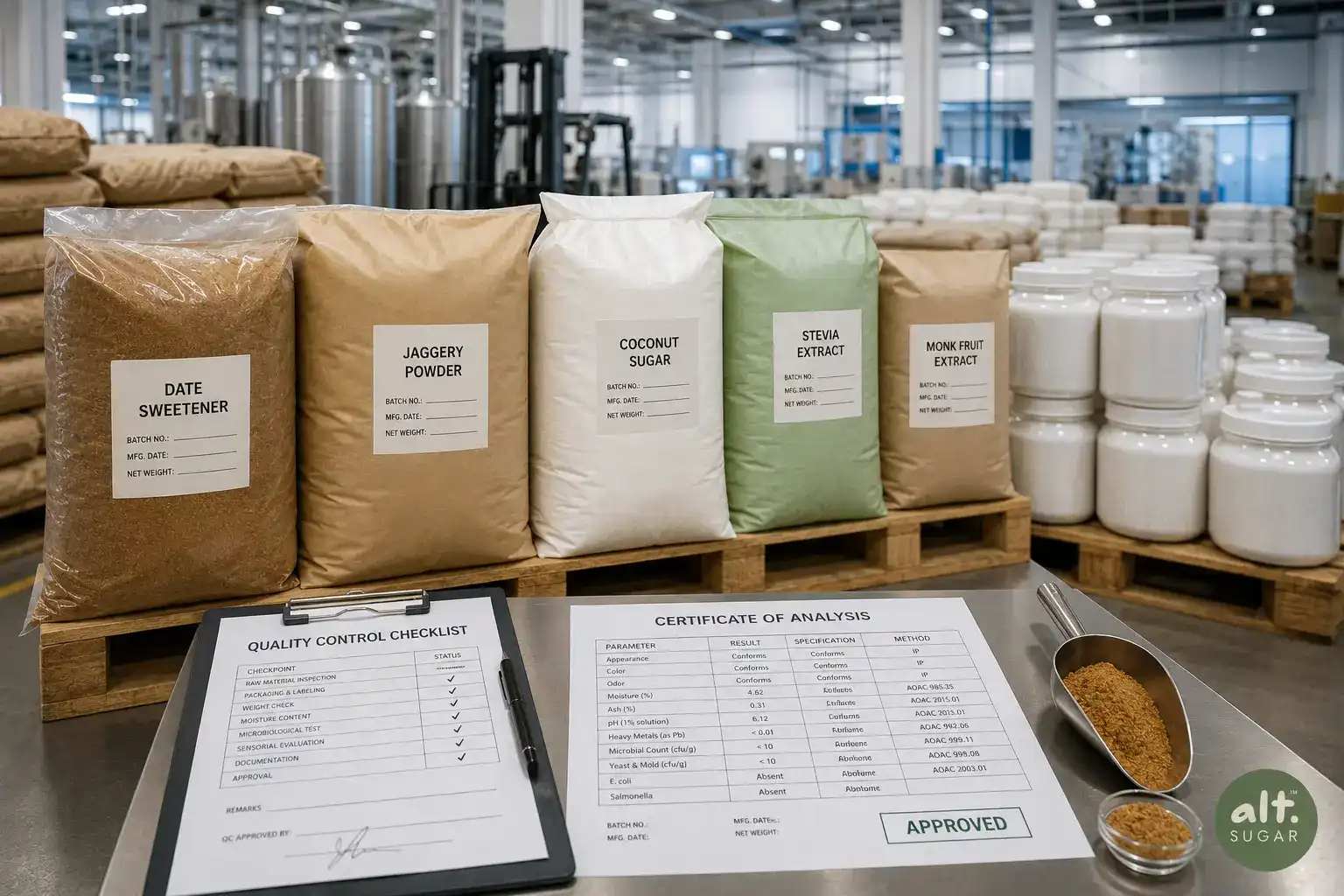
Certifications like FSSAI licensing, ISO compliance, and, where relevant, organic or non-GMO status have stopped being a nice-to-have and become table stakes across the board. Batch consistency matters enormously too, since even a small shift in sweetness intensity or moisture content can throw off an entire production run and cost far more than the ingredient itself did.
Traceability and documentation, including certificates of analysis and clear origin details, come up constantly now, from both domestic buyers and export clients who need the paperwork ready for customs. Supply capability and realistic lead times matter as well, especially for imported specialty sweeteners where a single shipping delay can stall an entire production calendar for weeks.
Here's something many buyers overlook until it costs them: technical support has quietly become one of the biggest differentiators among suppliers. Newer ingredients like allulose or tagatose aren't something every in-house food technologist has deep experience with yet, so guidance on usage ratios and blending makes a genuinely practical difference.
Anyone evaluating suppliers should request samples, verify certifications independently rather than taking a claim at face value, and run small-batch trials before signing off on a large order. Skipping that step tends to be the expensive lesson everyone learns exactly once.
A Practical Buying Checklist
A short list of checks before you commit, whether you're buying a small jar or a shipping container: - Confirm purity levels for stevia and monk fruit extracts specifically, since lower-purity versions taste noticeably different from what you might expect walking in - Ask for third-party lab testing or a certificate of analysis on bulk orders, every time, no exceptions - Check packaging quality for moisture protection, particularly with hygroscopic ingredients like jaggery powder and coconut sugar - Compare cost per unit of sweetness rather than per kilogram, since high-intensity sweeteners need far smaller quantities to do the same job - Clarify minimum order quantities and consistency guarantees upfront if you're buying commercially, before any money changes hands
For companies sourcing bulk sweetening ingredients, quality certifications, batch consistency, traceability, documentation, supply capability, and technical support should carry more weight than price alone. Inconsistent ingredient quality has a way of turning into expensive reformulation headaches down the line, and that cost rarely shows up on the original invoice.
Natural Sweetener Trends in 2026
Rare sugars like allulose and tagatose are gaining clearer regulatory standing in more markets this year, and that alone should push them well past their current niche status. Watch this space closely if you're in product development.
Blended sweetener systems, pairing a high-intensity extract like stevia or monk fruit with a bulking agent like erythritol or allulose, are becoming the default formulation approach rather than the exception it used to be.
At the same time, whole-food options like dates and coconut sugar are gaining ground in categories where "unprocessed" resonates strongly with buyers, even as zero-calorie categories keep expanding for diabetic and weight-conscious consumers on a separate track entirely.
Businesses launching sugar-reduced or sugar-free products this year are increasingly building multiple SKUs across different sweetener types rather than betting everything on one formulation. Taste preference and health priorities vary a lot even within a single product category, and treating every customer the same is a mistake more brands are learning to avoid.
Food and beverage businesses sourcing natural sweetening ingredients at scale have options like AltSugar, which supplies dates, jaggery, coconut sugar, stevia, monk fruit, and other specialty sweeteners to B2B manufacturers building sugar-reduced products.
Wrapping It Up
This natural sweeteners list shows that there isn't a single sugar alternative that's ideal for everyone. The best natural sweetener depends on your health goals, cooking method, taste preference, and nutritional priorities. Whether you're looking for a natural sugar substitute for baking, diabetes management, weight loss, or commercial food manufacturing, understanding how each sweetener performs will help you make a better choice.
Dates, jaggery, and coconut sugar bring real whole-food character and minerals, but they still move blood sugar meaningfully, no matter how clean the label reads. Stevia, monk fruit, erythritol, and allulose barely touch glucose levels, but each one needs the right pairing to match sugar's texture and browning in an actual recipe.
Your specific use case, taste priorities, and health goals should drive the choice here, not the marketing copy on the packaging. And if you're managing a medical condition, loop in a doctor before making any big changes to your diet.
Frequently Asked Questions
Q1. What is the healthiest natural sweetener?
There's no single universal answer, since "healthiest" shifts depending on what you're optimizing for. For blood sugar control, stevia, monk fruit, erythritol, and allulose barely register. For added nutrients like fiber and minerals, dates and jaggery offer more, though they still raise blood sugar.
Q2. Is jaggery healthier than sugar?
It holds onto some minerals refined sugar loses in processing, but it's still calorie-dense and affects blood glucose, sometimes more unpredictably than white sugar depending on purity.
Q3. Which natural sweetener works best for baking?
Allulose and coconut sugar caramelize and brown much like regular sugar, which makes them well suited for baked goods. Erythritol also performs reliably in most baking situations.
Q4. Does stevia actually help with weight loss compared to sugar?
Stevia contributes zero calories, which can support a calorie deficit, but weight loss depends on the whole diet, not one ingredient swap.
Q5. Are natural sweeteners safe for people with diabetes?
Low or zero-glycemic options like stevia, monk fruit, erythritol, and allulose are generally considered suitable, but individual responses vary, so a conversation with a doctor before making dietary changes is worthwhile.
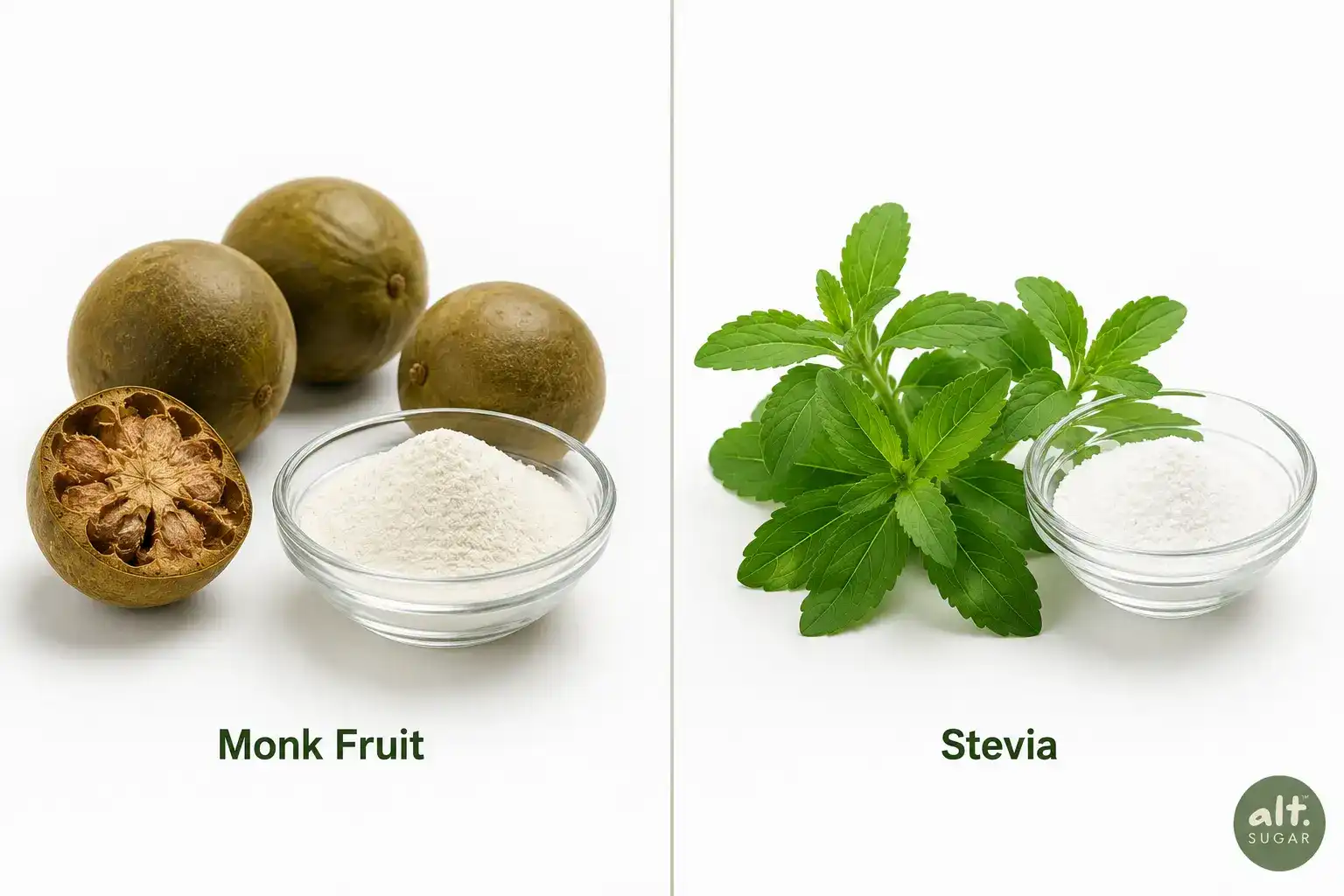
Q6. What's actually different between monk fruit and stevia?
Both are high-intensity plant extracts with zero calories, sourced from different plants with distinct taste profiles. Monk fruit tends to leave a cleaner aftertaste for some people, while stevia has a longer commercial track record and wider availability.
Q7. Can natural sweeteners upset digestion?
Sugar alcohols like erythritol and xylitol can cause bloating or discomfort in some people at higher amounts, since the body doesn't fully absorb them.
Q8. Which one tastes closest to real sugar?
Allulose is usually cited as the closest match, both in taste and in how it performs during baking, with erythritol close behind.
Q9. Is coconut sugar actually low glycemic?
Its glycemic index runs somewhat lower than table sugar on average, but it varies by brand and shouldn't be treated as a genuinely low-glycemic sweetener overall.
Q10. Do natural sweeteners cost more than regular sugar?
Generally, yes, especially imported specialty options like monk fruit, tagatose, and allulose. Jaggery and coconut sugar stay more affordable, particularly when sourced domestically within India.
Share this article

About the Author
Sachhin Kummar
Founder, AltSugar™
Sachhin Kummar is the Founder of AltSugar™, an ingredient company dedicated to helping food manufacturers, FMCG brands, and food innovators reduce refined and synthetic sugar through natural, clean-label sweetening solutions. With 6+ years working specifically with R&D teams, procurement functions, and product development leaders on the natural sweetener transition.
Connect on LinkedIn