There is a conversation happening in food industry boardrooms, R&D labs, and procurement offices right now that was not happening five years ago.
It is not about taste. It is not about packaging. It is not even primarily about cost.
It is about ingredients. Specifically, what is in the product, where it came from, what it does to the person consuming it, and whether the brand can stand behind every word on the label without hesitation.
That conversation is the natural sweetener revolution. And in 2026, it will have moved from the fringes of the health food space into the centre of mainstream food manufacturing strategy.
I have been working on this transition for over six years with R&D teams, procurement functions, food manufacturers, and brand owners across India and internationally. What I see in the market right now is not a trend.
It is a structural shift. And the brands that understand it early will build advantages that late movers simply cannot buy.
This blog is what I would tell every food founder, product director, and procurement head if I had an hour with them today.
Why 2026 Is Different From Every Year Before It
Every year for the past decade, someone has declared that this is the year natural sweeteners go mainstream. For most of those years, they were slightly premature.
2026 is different. And it is different for three reasons that are converging simultaneously, which is what makes this moment genuinely unlike any that came before it.
The regulatory environment has shifted permanently
Sugar taxes are law in the United Kingdom, Mexico, South Africa, Thailand, and across significant parts of the European Union.
Front-of-pack nutrition labelling requirements are tightening across markets. India is watching these developments closely and the direction of travel is not ambiguous.
The brands reformulating today are not responding to current regulation. They are positioning ahead of the regulation that is coming. That is a fundamentally different strategic posture, and it is worth understanding the difference.
Consumer health literacy has reached a tipping point
For decades, the food industry operated with a reasonable assumption: most consumers do not read labels carefully. That assumption is no longer reliable.
The combination of widespread smartphone access, health information availability, and a global pandemic that made personal health feel urgent has produced a consumer who is more label-aware, more ingredient-conscious, and more willing to switch brands over an ingredient decision than at any previous point in history.
Added sugar is now a red flag that costs brands sales. Clean-label sweeteners are becoming a purchase driver.
The ingredient supply chain has matured
Five years ago, a food manufacturer wanting to reformulate with Monk Fruit Extract or high-quality Date Powder faced genuine supply challenges inconsistent quality, limited bulk availability, and insufficient application support.
That infrastructure gap is now closing. The supply chains exist. The certifications exist. The formulation knowledge exists. The barrier to switching is lower than it has ever been.
Three forces, converging at once. This is what a structural shift looks like in the early stages before it becomes obvious to everyone, and therefore no longer an advantage to anyone.
The Five Natural Sweetener Trends Defining 2026
Date Sugar The Whole-Fruit Sweetener Whose Moment Has Arrived
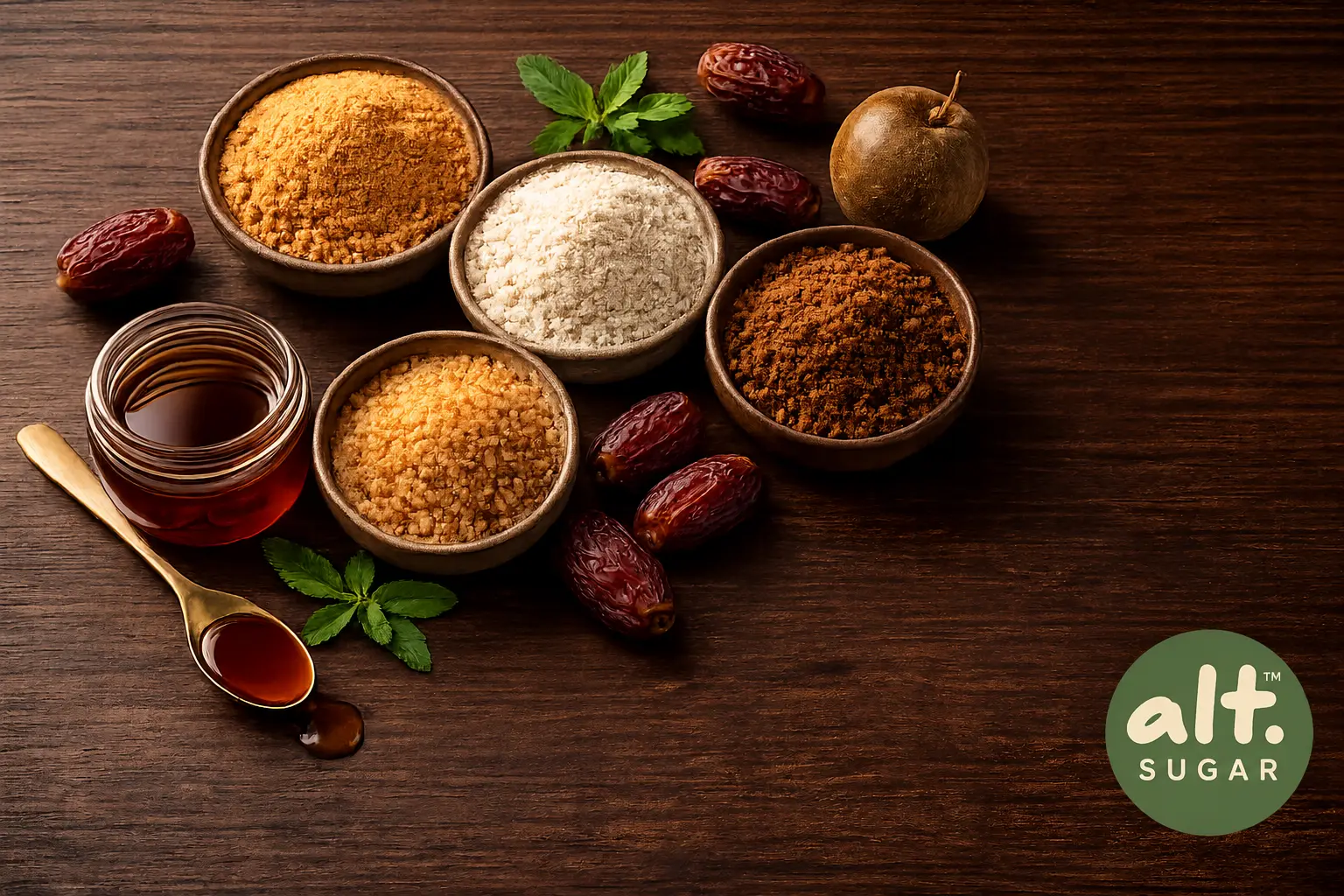
Date Sugar is made from one ingredient: whole dates, dehydrated and ground into a fine powder. Nothing removed. Nothing added. The entire fruit fiber, potassium, magnesium, iron, antioxidants in a format that food manufacturers can actually work with.
Its glycemic index sits at approximately 42, compared to 65 for refined white sugar. That difference is not cosmetic it is the difference between a sweetener that nourishes and one that merely satisfies. And on a label, Date Sugar or Date Powder is the kind of ingredient declaration that builds consumer trust rather than eroding it.
Demand is growing across Europe, North America, and the Middle East particularly in bakery, confectionery, baby foods, breakfast cereals, and premium snacking. Indian manufacturers are beginning to understand what global brands already know: this ingredient performs, it labels cleanly, and consumers respond to it positively.
At AltSugar™, we manufacture and supply Date Powder, Date Syrup, and Date Paste three formats that cover the full range of food applications, from dry blends and bakery to liquid applications and confectionery fillings. We source from Indian date farmers in Rajasthan and Gujarat, process to finished ingredient standard, and supply globally.
Monk Fruit Extract The Zero-Calorie Ingredient That Changes the Formulation Equation
Monk Fruit Extract is derived from the Luo Han Guo fruit, cultivated for centuries in the mountainous regions of southern China. Its sweetness comes from compounds called Mogrosides specifically Mogroside-V which deliver sweetness at intensities ranging from 20 to 200 times that of sugar, with zero calories and zero glycemic impact.
No bitter aftertaste at the right grade. Completely heat-stable. Diabetic-friendly. And increasingly, the ingredient that food scientists reach for when they need to reduce sugar without compromising taste particularly in beverages, functional foods, protein bars, and confectionery.
What most buyers do not fully understand is that Monk Fruit Extract is not a single ingredient it is a spectrum. The grade matters enormously. MV-5% is an economical entry point for blended sweetener systems. MV-50% is a high-intensity, premium-grade extract for applications requiring maximum sweetness with minimum usage level. Getting the grade wrong is one of the most common and most costly mistakes in natural sweetener reformulation.
AltSugar™ supplies all four grades MV-5%, MV-15%, MV-25%, and MV-50% with the application guidance to help your R&D team choose correctly from the outset.
Coconut Sugar and Jaggery Heritage Ingredients Finding a Global Audience
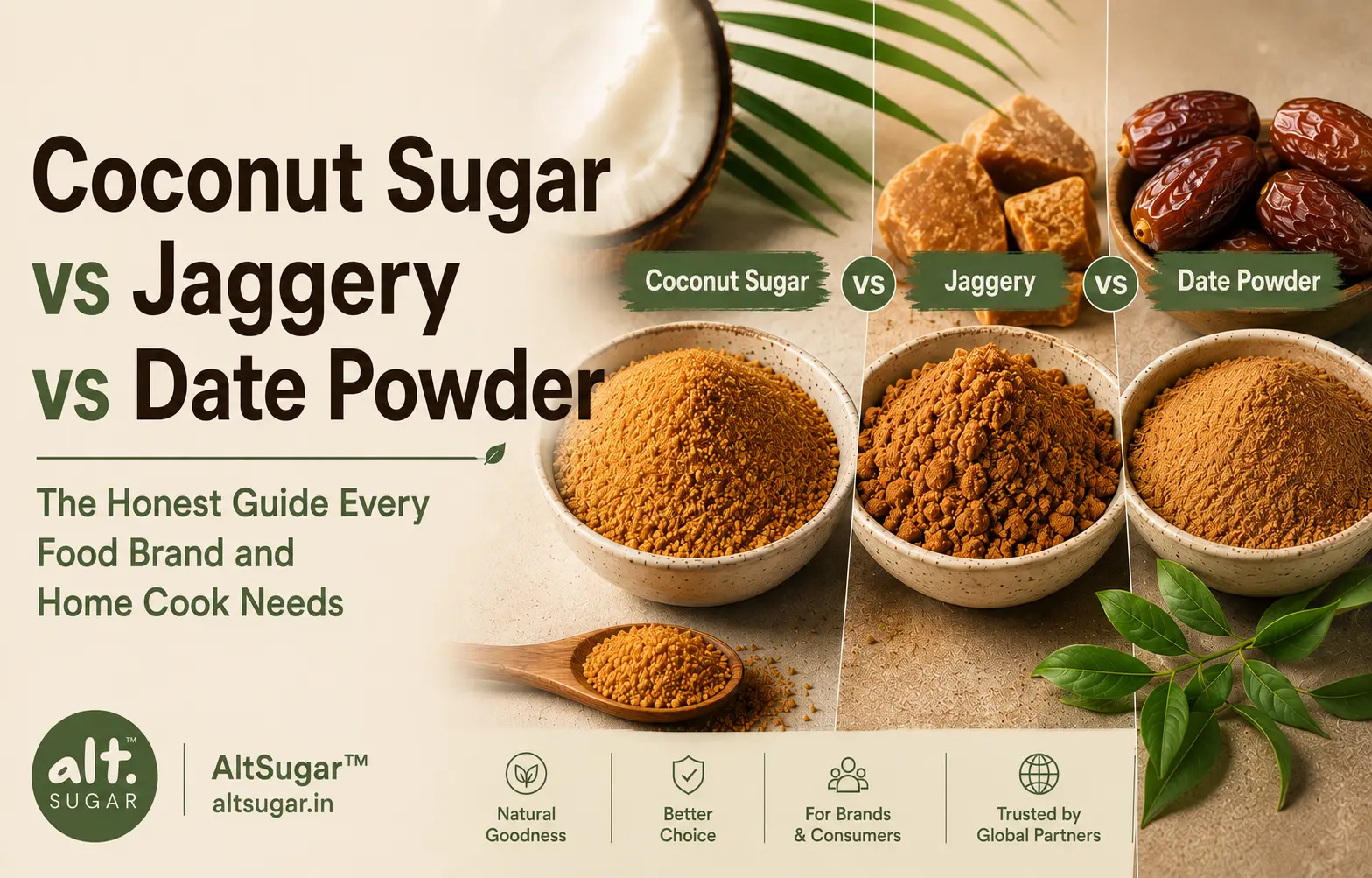
Coconut Sugar made from the nectar of coconut palm blossoms has a glycemic index of approximately 35, a rich mineral profile, and a naturally complex flavour that refined sugar cannot replicate.
Jaggery, the traditional unrefined sweetener used across South Asia for centuries, is finding new audiences in Western clean-label markets precisely because of what it represents: authentic, traceable, minimally processed sweetness with a story behind it.
Both ingredients are riding a wave of consumer interest in heritage positioning the growing preference for food with provenance, with history, with a supply chain that can be explained simply and honestly. In 2026, that positioning is not a niche. It is a growing segment of mainstream consumer expectation.
Custom Blended Sweeteners Where the Smartest Formulation Work Is Happening
Here is what separates good R&D teams from genuinely excellent ones in 2026: the understanding that no single sweetener solves every formulation challenge.
Date Sugar delivers nutrition and flavour complexity but carries cost and does not dissolve fully in liquids. Monk Fruit delivers zero-calorie intensity but needs a carrier for body and mouthfeel. Erythritol provides bulk but can crystallise in certain applications. Stevia Reb-M offers mainstream-ready clean sweetness but performs best in a system rather than alone.
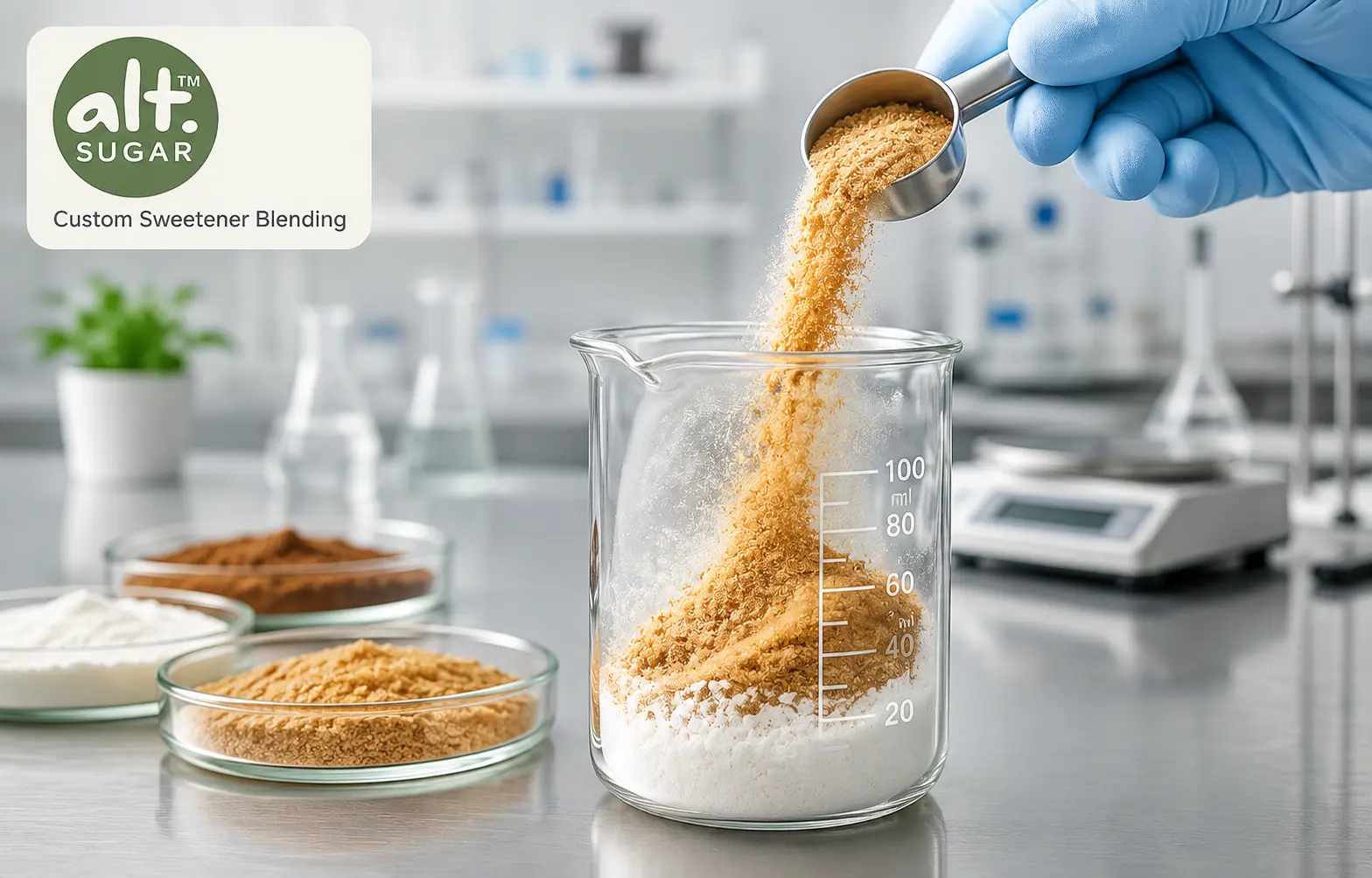
The answer is strategic blending. A Date Sugar and Monk Fruit blend delivers clean-label credibility, genuine nutritional value, zero-calorie positioning, and taste complexity in a single ingredient system. A Stevia Reb-M and Erythritol combination provides a near-1:1 sugar replacement with minimal aftertaste and strong cost efficiency at scale.
The brands building competitive positions in 2026 are the ones that have stopped looking for a single sweetener solution and started building sweetening systems. This is where AltSugar™ works with brands directly on bespoke blends tailored to the specific application, label requirements, and commercial constraints of each product.
Dehydrated and Freeze-Dried Fruit Powders The Multi-Tasking Ingredient
Why use a sweetener that only sweetens when you could use one that simultaneously colours, flavours, and nutritionally enhances your product?
Dehydrated and freeze-dried fruit powders Mango, Strawberry, Blueberry, Pineapple, Amla, Banana, Dragon Fruit and more are emerging as a distinct category within the natural sweetener space.
Particularly powerful in smoothie powders, functional beverages, infant nutrition, premium snacking, and nutraceutical blends, they deliver natural sweetness bundled with antioxidants, vitamins, and clean colour without a single artificial ingredient in sight.
One ingredient doing four jobs. That is 2026 formulation thinking.
What the Smartest Food Brands Are Doing Right Now
The brands that will own the natural sweetener wave are not waiting to see how it unfolds. Here is what the sharpest operators in the food industry are doing today observed directly from the reformulation conversations we are part of at AltSugar™.
- They are reformulating proactively, not reactively. They are not waiting for a sugar tax to arrive or a competitor to take their health-conscious consumer. They are working with R&D teams now to substitute, blend, and test so that when the market moment arrives, they are already there.
- They are making the sweetener the story. Sweetened with Date Sugar on a front-of-pack callout is not a footnote it is a brand asset. Brands that name their natural sweetener explicitly are seeing stronger consumer engagement and higher trust scores in category research. The ingredient is becoming part of the product identity.
- They are locking in supply relationships early. Natural sweeteners particularly high-grade Monk Fruit Extract and premium Date Powder have global supply constraints that will tighten as demand scales. The brands building supplier relationships now are protecting themselves from the price volatility and availability challenges that are coming.
- They are thinking globally from the start. The fastest-growing markets for natural sweeteners right now include Germany, the Netherlands, the Gulf region, and increasingly Southeast Asia. Brands formulating with globally compliant, export-ready natural sweeteners are opening market doors that competitors relying on refined sugar cannot access.
The AltSugar™ Portfolio Built for the Brands Ready to Move
At AltSugar™, we are not a single-ingredient supplier. We are a full-spectrum natural sweetener partner which means your product team can address multiple formulation challenges through a single supplier relationship, with consistent quality, certified compliance, and genuine application expertise.
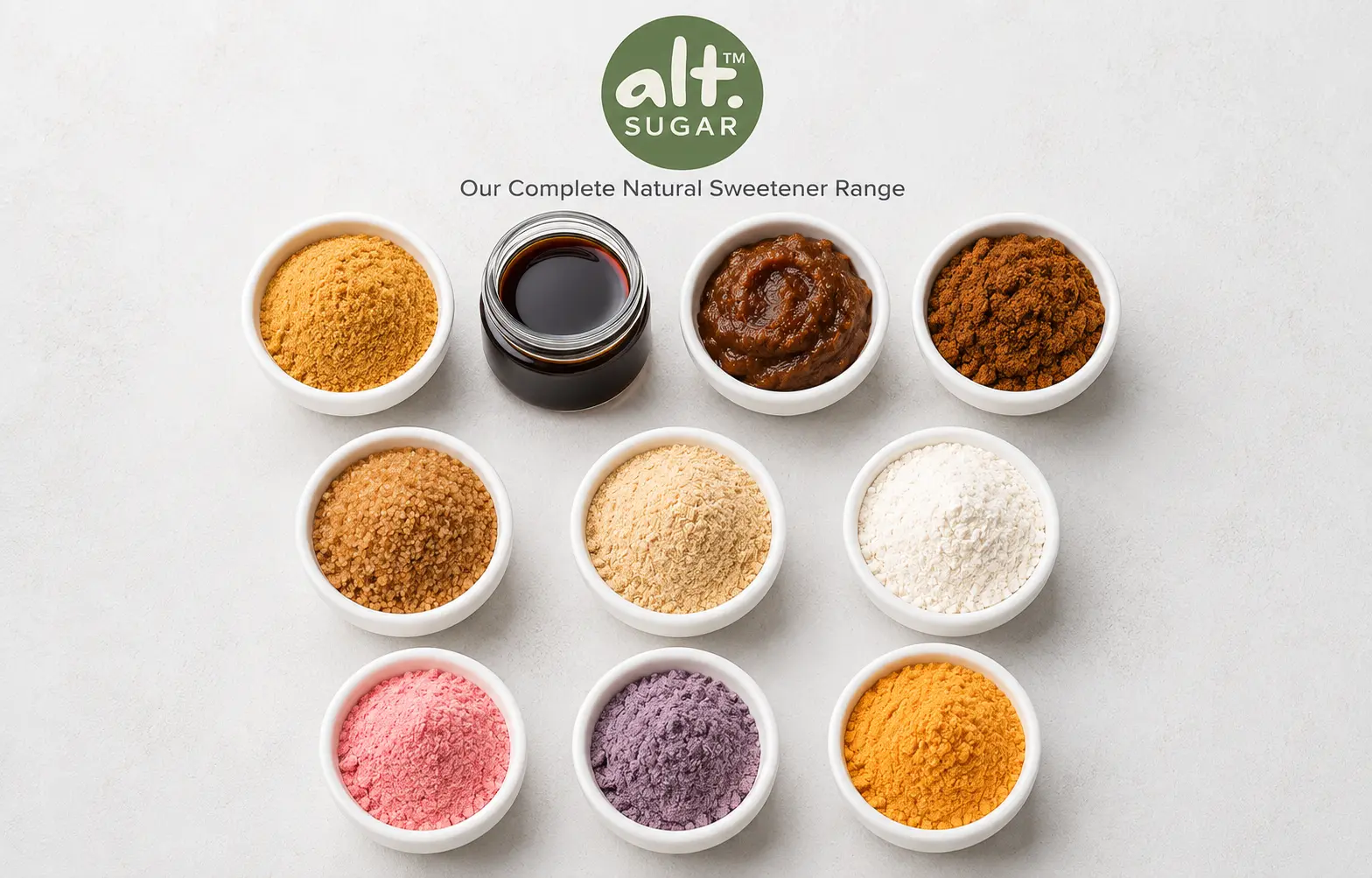
Our portfolio covers every tier of natural sweetening:
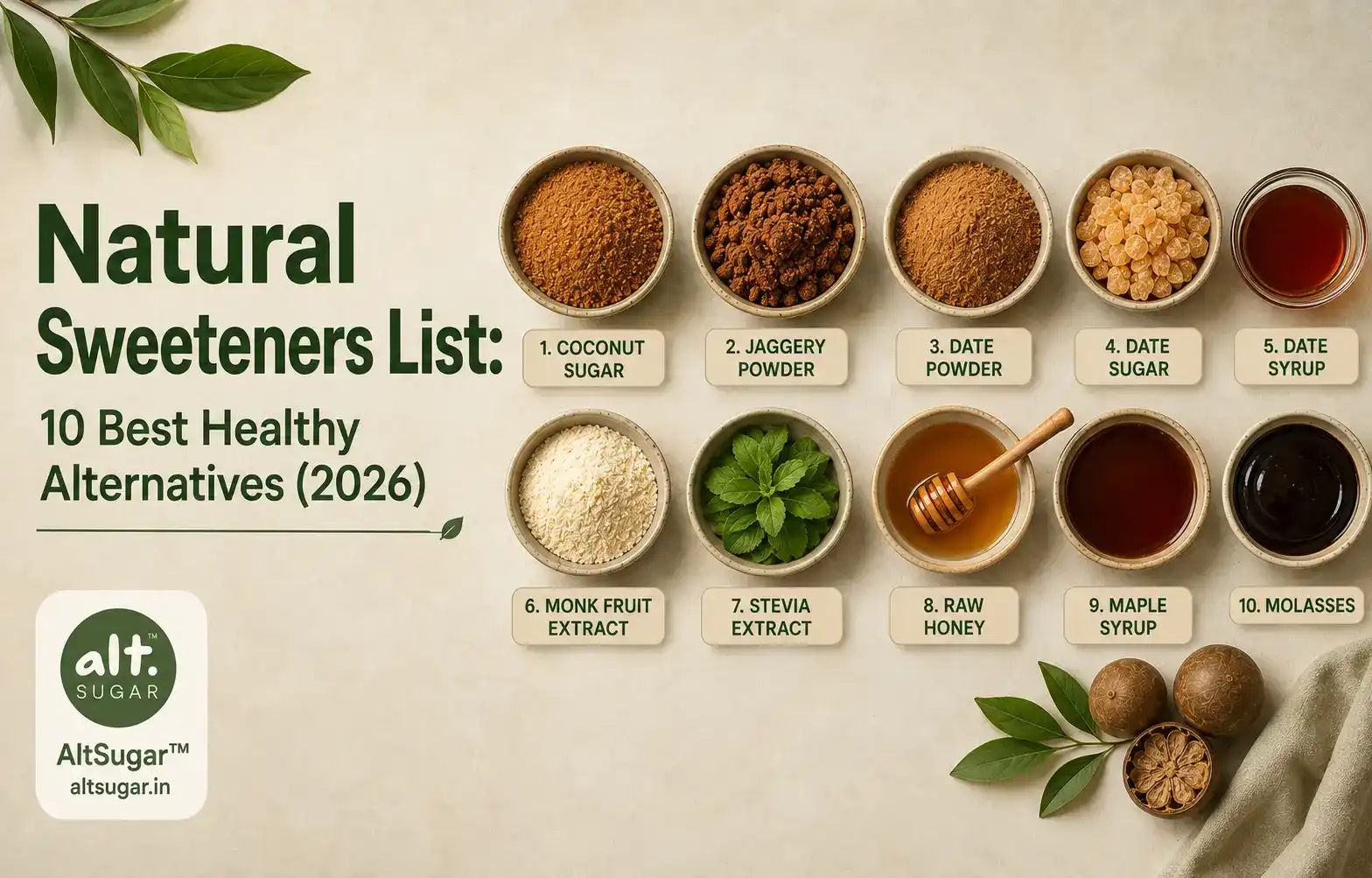
- Date-Based Ingredients: Date Powder (Yellow and Brown), Date Syrup, Date Paste, Chopped Dates, Date Seed Powder, and Date Seed Coffee. Manufactured from Indian dates. Bulk export-ready.
- High-Intensity and Next-Generation Sweeteners: Monk Fruit Extract (MV-5%, MV-15%, MV-25%, MV-50%) and Stevia Reb-M. For brands that need precision sweetness control, zero-calorie credentials, and clean-label compliance.
- Heritage Natural Sweeteners: Coconut Sugar and Jaggery Powder. For brands building on traditional provenance, heritage positioning, and mineral-rich natural sweetness.
- Dehydrated and Freeze-Dried Ingredients: Fruit and vegetable powders and slices across a wide range of varieties. For brands that want sweetness, colour, flavour, and nutrition from a single clean ingredient.
All products are 100% natural, non-GMO, and clean-label compliant available in bulk for food manufacturers, FMCG brands, nutraceutical companies, bakeries, beverage brands, and white-label manufacturers globally.
The Takeaway
2026 is not the year natural sweeteners become an option. It is the year they become the standard against which every food brand's ingredient decisions will be measured.
The brands that understand this now that move from reactive to proactive, from single-ingredient thinking to portfolio thinking, from supplier transactions to genuine ingredient partnerships are the ones that will be growing strongly in 2030 while others are still scrambling to reformulate.
The natural sweetener revolution is not coming. It is already here. The only question worth asking is which side of it your brand is building on.
Share this article

About the Author
Sachhin Kummar
Founder, AltSugar™
Sachhin Kummar is the Founder of AltSugar™, an ingredient company dedicated to helping food manufacturers, FMCG brands, and food innovators reduce refined and synthetic sugar through natural, clean-label sweetening solutions. With 6+ years working specifically with R&D teams, procurement functions, and product development leaders on the natural sweetener transition.
Connect on LinkedIn