

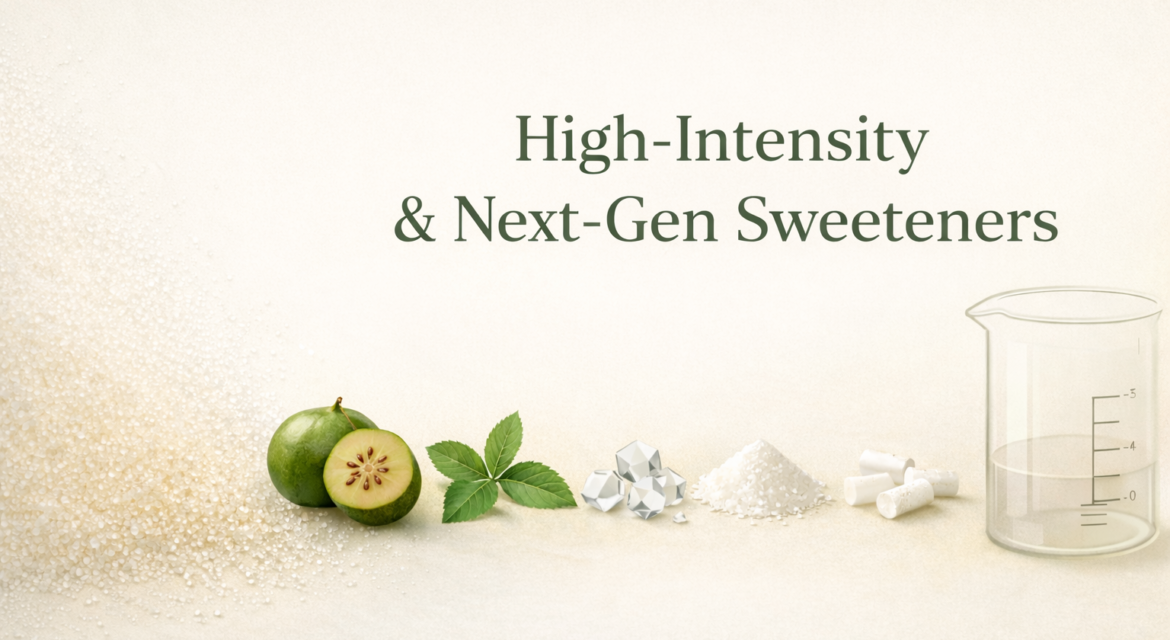
As consumer demand shifts toward healthier, lower‑sugar products, food and beverage brands are no longer just “replacing sugar.” They are rebuilding sweetening systems entirely – using high‑intensity sweeteners and what the industry now calls next‑gen sweeteners to maintain taste, texture, and brand trust.
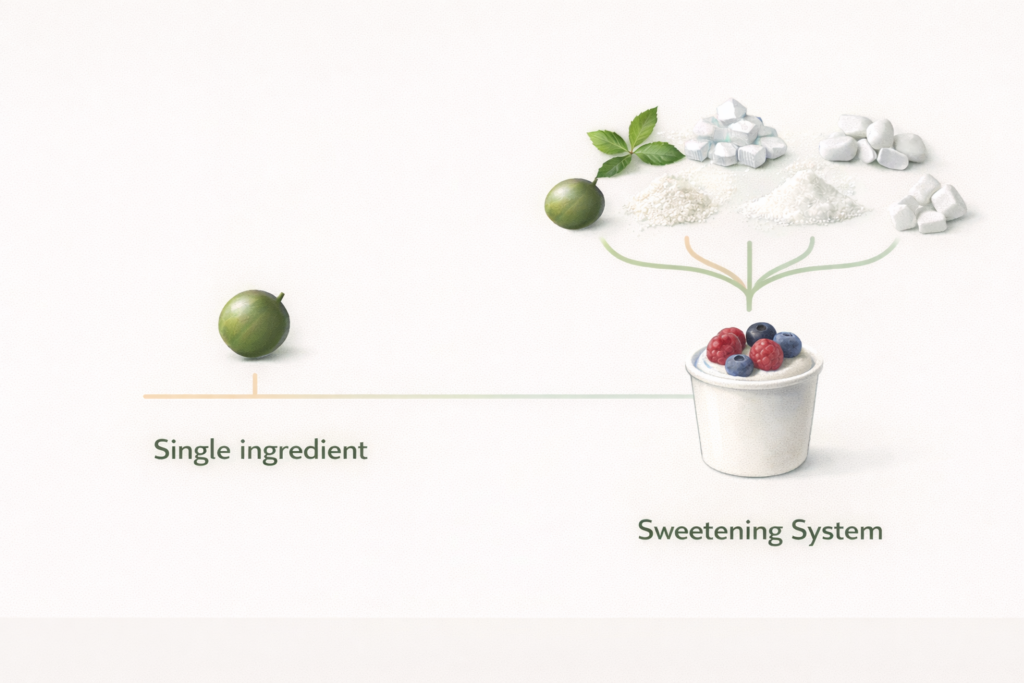
For manufacturers exploring sugar reduction, the key is to move beyond simple ingredient substitution and think instead in terms of sweetening systems — combinations of ingredients that work together to deliver sweetness, mouthfeel, stability, and label appeal.
Why brands are moving beyond sugar reduction
Regulatory pressure, rising sugar taxes in some geographies, and evolving health awareness are pushing brands to rethink sweetness. However, the deeper driver is consumer expectations.
Modern consumers:
- Look for lower‑sugar or reduced‑sugar claims.
- Prefer natural ingredients on the label.
- Notice taste and texture changes when sugar is removed.
Simply cutting sucrose without reformulating the sweetening system can lead to:
- Flat or insipid taste.
- Loss of body and mouthfeel.
- Poor shelf life or texture performance.
This is why many brands have moved beyond simple sugar reduction to consider high‑intensity and next‑gen sweeteners as part of a broader ingredient strategy.
The role of high‑intensity sweeteners in modern formulations
High‑intensity sweeteners are ingredients that deliver much higher sweetness per unit weight than sucrose, often with lower or zero calories. Because they are used at very low levels, they can significantly reduce sugar content without dramatically increasing cost or changing the overall ingredient list.
However, sweetness intensity is only one part of the picture. In professional formulation, brands must also consider:
- Impact on flavour balance.
- Aftertaste (especially with earlier‑generation high‑intensity sweeteners).
- Texture, volume, and mouthfeel.
- Stability under heat, pH, and processing conditions.
This is where “next‑gen” sweeteners differ: they are selected not just for potency but for cleaner taste, better compatibility, and cleaner labels.
Key features food brands look for
When evaluating high‑intensity and next‑gen sweeteners, food and beverage brands typically focus on four dimensions:
1. Clean‑label fit
- Can the ingredient be listed in a simple, consumer‑friendly way?
- Does it align with “natural,” “plant‑based,” or “no artificial sweeteners” positioning?
2. Natural origin
- Is the sweetener derived from natural sources (plants, fruits, or fermentation)?
- How transparent is the supply chain?
3. Sensory performance
- Taste intensity and sweetness profile (fast‑onset, slow‑fade, lingering aftertaste).
- Impact on mouthfeel, body, and overall product experience.
4. Functionality and stability
- How well does it perform under heat, pH, or storage conditions?
- Does it interact with other ingredients (acids, proteins, gums, etc.)?
Brands that take a holistic view of these factors are more likely to land on successful, reformulated products than those who treat sweeteners as interchangeable “plug‑and‑play” substitutes.
How “next‑gen” differs from older sweeteners
Next‑gen sweeteners are distinguished not just by their origin but by how they are:
- Purified and standardized for consistent performance.
- Blended and engineered to minimize off‑notes and improve mouthfeel.
- Validated in real‑world applications (beverages, baked goods, dairy, confectionery, etc.).
For many brands, next‑gen sweeteners offer:
- Better taste profiles than older high‑intensity sweeteners.
- Improved compatibility with other ingredients.
- Stronger alignment with clean‑label and natural positioning.
This is why modern reformulation is less about “replacing sugar” and more about building a sweetening system that supports brand positioning, sensory quality, and technical performance.
Brief look at the main sweeteners in this category
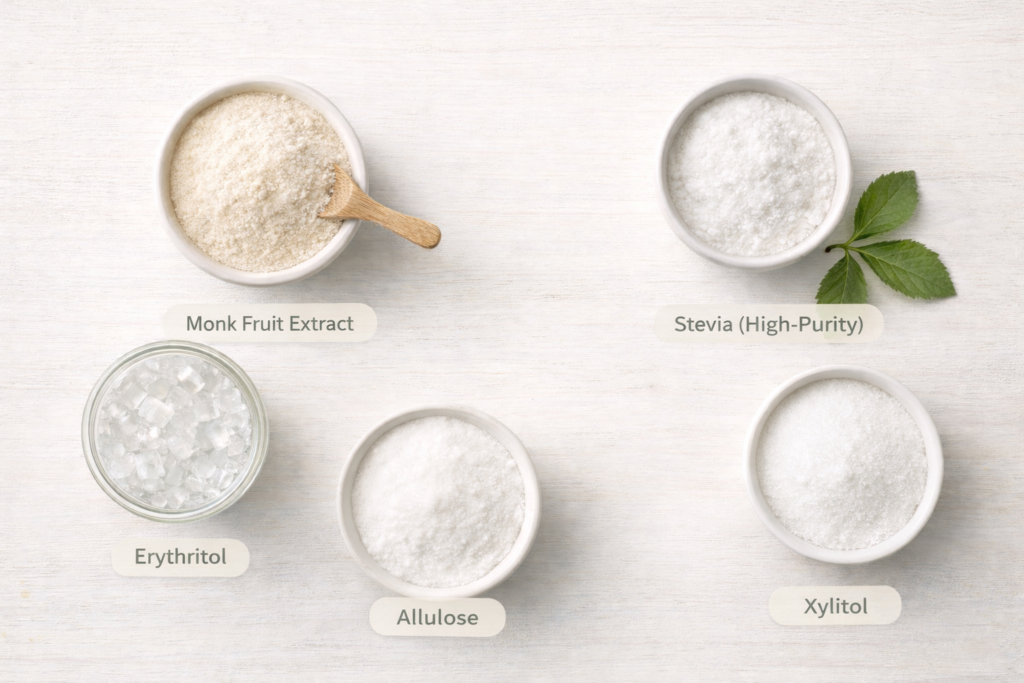
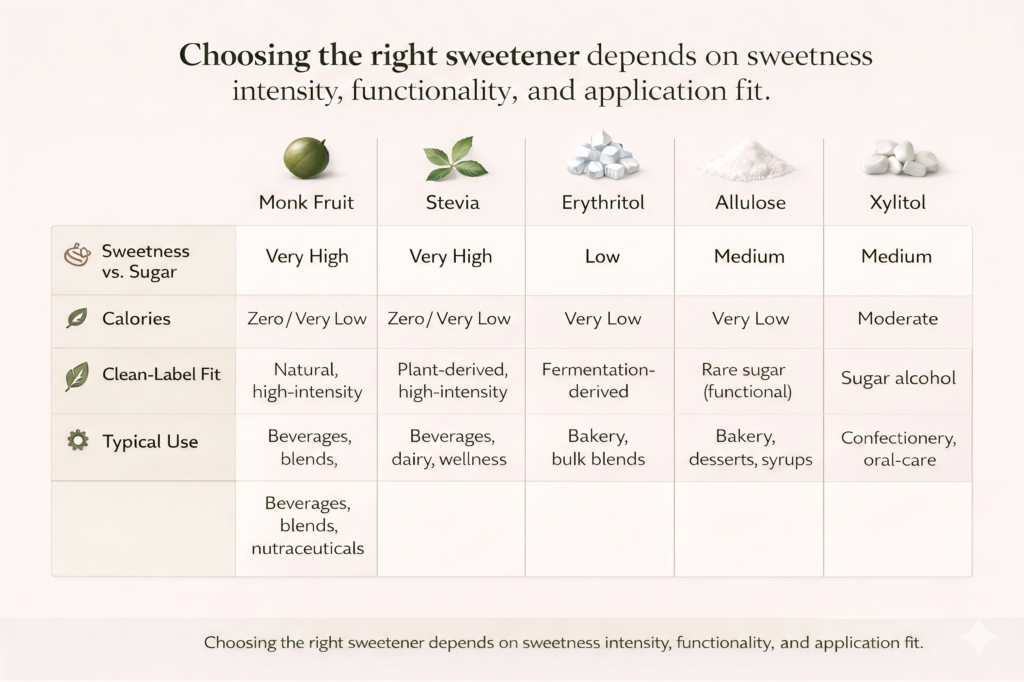
Within high‑intensity and next‑gen sweeteners, several ingredients have become central to sugar‑reduced formulations:
Monk Fruit (Mogroside‑based sweeteners)
- Naturally derived from monk fruit (Siraitia grosvenorii).
- High sweetness intensity with very low solids content.
- Often used in blends to support sugar reduction while contributing a clean, fruity sweetness.
High‑Purity Stevia (Stevia rebaudiana extracts)
- Plant‑derived glycosides that are highly sweet, with minimal calories.
- Earlier versions had bitter aftertaste; modern high‑purity systems deliver cleaner profiles.
- Frequently used in beverages, dairy, and confectionery for sugar reduction and clean‑label positioning.
Erythritol
- A sugar alcohol produced via fermentation.
- Naturally sweet, low‑calorie, and tooth‑friendly.
- Often used as a bulking agent and sweetness modifier in blends, helping to balance harsh sensations from other high‑intensity sweeteners.
Allulose
- A rare sugar naturally present in small amounts in fruits and other foods.
- Has sugar‑like taste and mouthfeel, but with minimal caloric impact.
- Particularly useful in baked goods, dairy, and frozen desserts where texture and browning are important.
Xylitol
- A sugar alcohol commonly used in chewing gum and oral‑care‑focused products.
- Provides sweetness similar to sucrose, with a positive effect on dental health.
- Sometimes used in confectionery and functional foods where sweetness and “mouthfeel health” are both important.
Each of these sweeteners serves a different role in a formulation. The magic usually lies not in choosing just one, but in designing a blend that leverages the strengths of multiple ingredients.
Using blends, not just single ingredients
In professional food development, brands are increasingly moving away from single‑sweetener systems and toward blends that combine:
- High‑intensity sweeteners (for sugar‑reduction power).
- Bulking or texture‑support ingredients (for mouthfeel and volume).
- Synergy‑enhancing partners (to suppress off‑notes and improve profile).
For example:
- Monk fruit + stevia can deliver sweetness with a cleaner profile than either alone.
- Erythritol in the background can soften harshness and support texture.
- Allulose can add volume and sugar‑like sensory behaviour in baked or frozen products.
Blends allow brands to:
- Reduce sugar significantly.
- Maintain taste and mouthfeel.
- Keep the label relatively simple and natural.
However, blending is not simple formula‑tweaking. It requires understanding sweetness curves, pH sensitivity, heat stability, and interaction with other ingredients.
Formulation challenges brands face
Even with high‑intensity and next‑gen sweeteners, brands still encounter several challenges:
1. Off‑tastes and aftertastes
Some sweeteners can bring bitterness, metallic notes, or lingering sweetness, especially at higher use levels. Careful blending and dose control are essential.
2. Texture and mouthfeel changes
Sugar contributes to body and viscosity. When it is reduced or removed, products can feel thin, chalky, or watery. Bulking agents, gums, and structural sweeteners (like allulose or erythritol) help compensate.
3. Stability and shelf‑life considerations
Sweeteners can interact with acids, proteins, or emulsifiers. Some may crystallize or change over time, affecting texture and appearance. Processing conditions (high heat, pH shifts) must be evaluated.
4. Consumer expectations and labelling clarity
Brands must balance technical choices with what consumers understand and trust. Using higher‑quality, cleaner‑label sweeteners can help support claims like “no artificial sweeteners,” “natural,” or “reduced sugar.”
Why ingredient and formulation expertise matters
When working with high‑intensity and next‑gen sweeteners, the real differentiator is not the ingredient list itself, but the understanding behind how each component behaves.
For food and beverage brands, this means:
- Knowing how sweetness profiles change with different sweeteners and blends.
- Understanding how each ingredient interacts with pH, heat, proteins, and gums.
- Balancing sweetness, texture, and mouthfeel while keeping the label clean and natural.
In practice, this requires:
- Careful dosage and blending.
- Testing in real product matrices (beverages, dairy, bakery, confectionery, functional foods).
- Iterative refinement based on sensory and stability data.
With the right approach, brands can move beyond simple sugar reduction and build sweetening systems that support both technical performance and consumer expectations.
Whether you are reformulating a beverage, dairy product, bakery item, or functional food, high‑intensity and next‑gen sweeteners can be powerful tools — when used thoughtfully and as part of a well‑designed sweetening system.
For more information on natural sweetening systems and ingredient options, visit the AltSugar™ website: www.altsugar.in
AltSugar™ is a thought, a team, a company, and a life dedicated to creating and working towards natural alternatives to sugar. We are not just building a business; we are driving a mission to reshape how the world consumes sweetness.