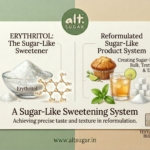

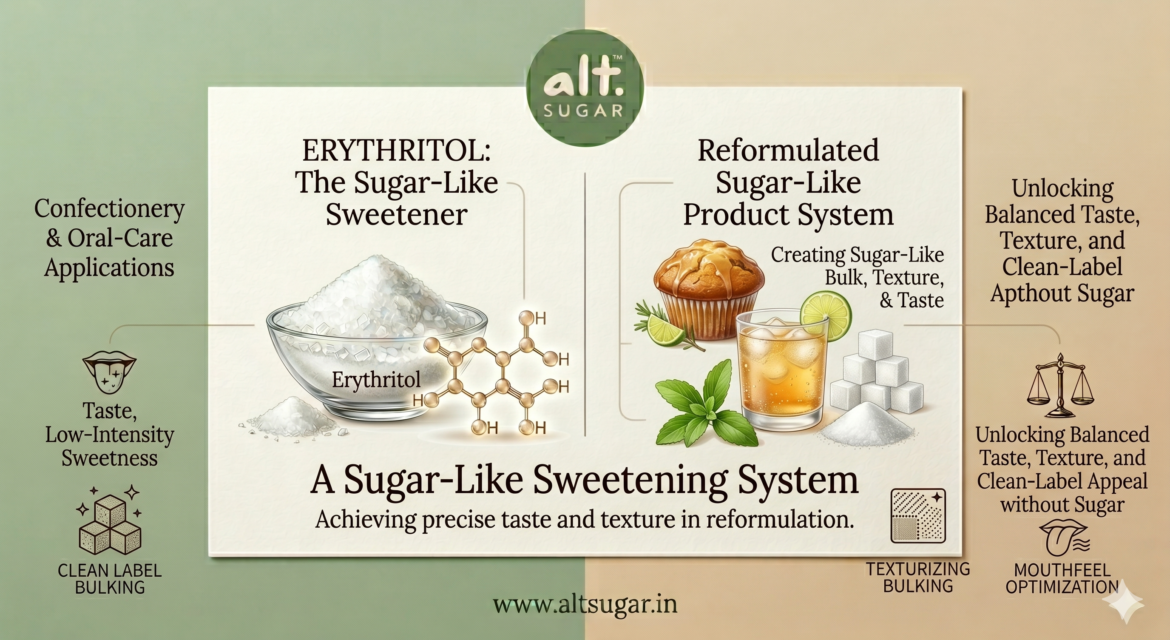
Erythritol has become one of the most important ingredients in modern sugar reduction because it helps bridge the gap between sweetness and functionality. For food and beverage manufacturers, product developers, R&D teams, procurement teams, brand owners, health-focused startups, nutraceutical companies, and bakery, beverage, dairy, confectionery, and functional food businesses, erythritol is often not the final sweetener on its own – it is the base ingredient that helps a sweetness system feel more like sugar.
That is why erythritol is so often used alongside monk fruit and stevia. It provides bulk, improves mouthfeel, and helps make reduced-sugar formulations easier to work with in real product applications.
What erythritol is
Erythritol is a sugar alcohol used as a sweetening ingredient in a wide range of food and beverage formulations. It is known for offering sweetness with very low caloric impact, which makes it useful for products aiming to reduce sugar without losing a familiar sensory profile.
Unlike highly intense sweeteners that deliver sweetness in very small amounts, erythritol behaves more like a bulking sweetener. That makes it especially useful where the final product needs structure, body, and a more sugar-like experience.
Why erythritol is used
Erythritol is widely used because it solves one of the biggest challenges in sugar reduction: sugar does more than sweeten. It also adds volume, influences texture, and helps create a fuller product experience. Erythritol helps fill that gap.
Brands often choose erythritol because it:
- Supports reduced-sugar formulation.
- Contributes bulk and mouthfeel.
- Has a clean and relatively neutral sweetness profile.
- Works well in combination with high-intensity sweeteners.
- Fits into many clean-label and better-for-you product concepts.
This is why erythritol is often seen as a functional support ingredient rather than just a sweetener.
Erythritol in sugar-like sweetness systems
One of erythritol’s most valuable roles is in combination systems. On its own, erythritol can provide sweetness, but it becomes much more effective when paired with other sweeteners such as monk fruit or stevia.
For example, erythritol with stevia (Rebaudioside-A 97%) can create a sweetness profile that is about 1:10 compared to sugar. In practical terms, this means the blend can help deliver strong sweetness with far less sugar than a traditional formulation, while also supporting bulk and usability.
This kind of system is important because high-intensity sweeteners alone do not provide the same body or usage structure as sugar. Erythritol helps make the formula feel more complete.
Why erythritol is often blended with monk fruit and stevia
In clean-label reformulation, erythritol is rarely used as a standalone hero ingredient. Its real strength is in blending.
With monk fruit
Monk fruit provides sweetness intensity, while erythritol helps create the bulk and mouthfeel needed for a more sugar-like system.
With stevia
Stevia can provide strong sweetness, but erythritol helps soften the profile and give the product more body.
In combination systems
These blends are useful when brands want:
- a more rounded sweetness profile.
- a better sensory experience.
- a practical 1:1 or near-1:1 style replacement strategy.
- a simpler path to reduced-sugar reformulation.
For formulators, this is where erythritol becomes especially valuable. It helps connect sweetness with function.
Key functional benefits
Erythritol offers several advantages for product development:
Bulk and body
It helps replace the mass that sugar normally contributes in a formulation.
Mouthfeel support
It improves the sensory experience in products that would otherwise feel too thin or incomplete after sugar reduction.
Sweetening system flexibility
It can be combined with monk fruit, stevia, and other natural sweeteners to create more balanced sweetness.
Clean-label relevance
It is often used in products positioned around natural, better-for-you, or reduced-sugar claims.
Product stability
It can perform well in many formulations where consistency and processing behavior matter.
These benefits explain why erythritol continues to play a central role in modern sugar reduction.
Where erythritol works best
Erythritol is especially useful in:
Beverages
It can support sugar reduction in beverages when used carefully with other sweeteners.
Bakery
It helps improve the body and structure of sugar-reduced bakery products.
Confectionery
It works well in candies, chewy products, and other sweet applications where texture matters.
Dairy
It may be used in flavoured dairy products where sweetness and mouthfeel both need attention.
Nutraceuticals and functional foods
It is useful in powders, tablets, sachets, and health-oriented products where sweetness and low caloric impact are both important.
The best applications usually depend on the role erythritol is expected to play in the final system.
What product developers should consider
For R&D teams, erythritol should be evaluated based on the target product rather than treated as a universal fix.
Important questions include:
- Is the formula needing bulk, sweetness, or both?
- Will erythritol be used alone or in combination?
- What sensory profile is expected?
- Does the product need a sugar-like finish?
- How will it behave with heat, moisture, or other ingredients?
Because erythritol is often part of a broader sweetness system, the final formula should be tested as a complete system, not just as an ingredient swap.
What procurement teams should evaluate
For procurement teams, the important factors are:
- source consistency.
- grade and particle size.
- application fit.
- supply reliability.
- price-performance balance.
Since erythritol is used in both standalone and blend-based systems, procurement decisions should be tied to how the ingredient will actually perform in the final product.
Final perspective
Erythritol is much more than a sweetener. In modern reformulation, it is often the ingredient that makes sugar-reduced systems practical, balanced, and easier to use. Its role in supporting bulk, mouthfeel, and blend performance makes it an essential part of many natural sweetening systems.
For brands building better-for-you products, erythritol is often one of the most useful ingredients in the formulation toolkit.
For more information on Erythritol as natural sweetening systems and ingredient options, visit the AltSugar™ website: www.altsugar.in
AltSugar™ is a thought, a team, a company, and a life dedicated to creating and working towards natural alternatives to sugar. We are not just building a business; we are driving a mission to reshape how the world consumes sweetness.