
Allulose is quickly becoming one of the most interesting ingredients in modern sugar reduction. For food and beverage manufacturers, product developers, R&D teams, procurement teams, brand owners, health-focused startups, nutraceutical companies, and bakery, beverage, dairy, confectionery, and functional food businesses, allulose offers a rare combination: a sugar-like sensory profile with low-calorie functionality.
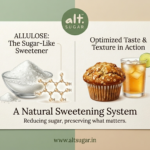
Unlike many alternative sweeteners that focus only on sweetness intensity, allulose is valued for what it does in the full product system. It contributes sweetness, supports browning, helps retain moisture, and performs in ways that can make reformulated products feel closer to their sugar-sweetened counterparts.
That is why allulose is often discussed not just as a sweetener, but as a functional sugar alternative.
What allulose is
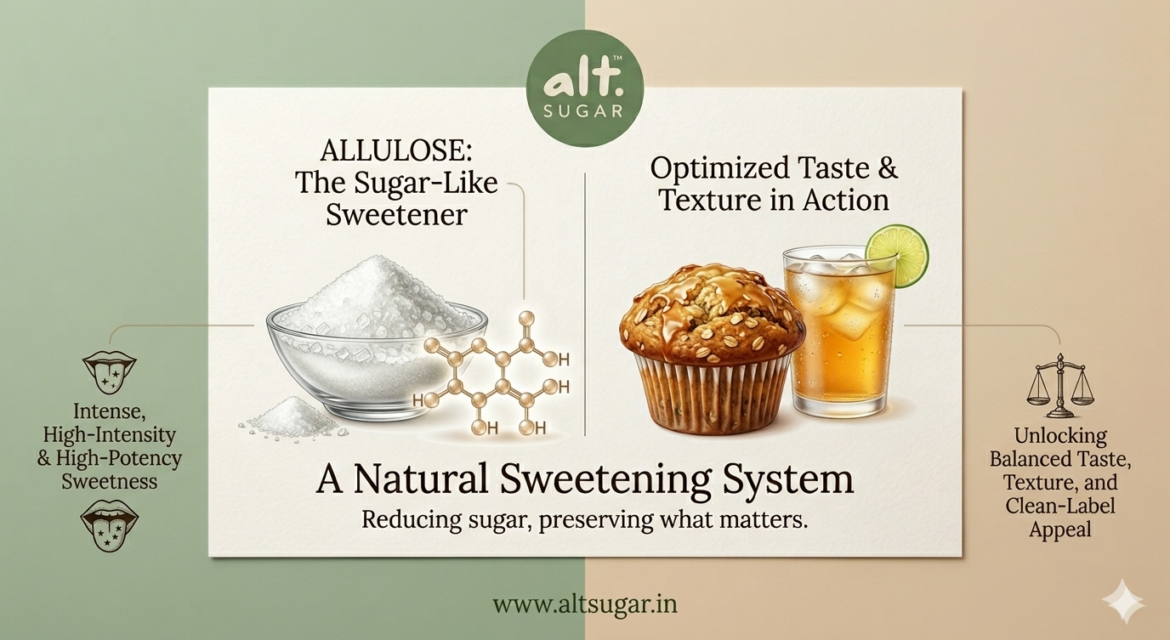
Allulose is a rare sugar found naturally in very small amounts in foods such as figs, raisins, and jackfruit. It tastes very similar to sucrose, but it delivers far fewer calories. That makes it especially useful for brands trying to reduce sugar without creating a noticeable sensory gap in the final product.
In formulation terms, allulose stands out because it behaves more like sugar than many other low-calorie sweeteners. It can help maintain sweetness, mouthfeel, and structure in products where sugar normally plays a major role.
Why allulose is getting attention
Allulose is attracting strong interest because it fits several priorities at once:
- It supports reduced-sugar and better-for-you positioning.
- It has a sugar-like taste profile.
- It can contribute to browning and caramelisation.
- It helps with moisture retention in baked and processed products.
- It works well in modern clean-label reformulation strategies.
For brands, this matters because replacing sugar is rarely about sweetness alone. Sugar also affects texture, appearance, shelf life, and flavour release. Allulose is valuable because it can help preserve more of those functional roles.
Why it is called a rare sugar
Allulose is often described as a rare sugar because it exists naturally in only very small quantities in common foods. Even though it is naturally occurring, it has only recently become more widely used in commercial food formulations.
That combination of natural origin and functional performance makes it especially attractive to product teams looking for ingredients that are both technically useful and label-friendly.
What makes allulose different
Many sweeteners are used only to add sweetness. Allulose goes further because it can influence how a product looks, feels, and behaves during processing.
Key features include:
- Sugar-like taste: It is one of the closest low-calorie alternatives to sucrose in sensory behaviour.
- Browning support: It can help achieve the colour and flavour development expected in baked goods and cooked applications.
- Moisture retention: It can help products stay softer and more appealing over time.
- Low-calorie positioning: It supports calorie reduction without forcing a dramatic compromise in taste.
This is why allulose is especially useful where product quality depends on more than just sweetness.
Where allulose works well
Allulose is especially relevant in the following categories:
Bakery
In cakes, cookies, muffins, and similar products, allulose can help support browning, softness, and more sugar-like sensory behaviour.
Dairy
In flavoured milk, yogurt, frozen desserts, and related products, it can help maintain sweetness and body.
Beverages
Allulose can support sugar reduction in drinks where a clean sweetness profile is important.
Confectionery
It can be helpful in products where taste and texture both need to stay close to the original sugar-based version.
Functional foods
It is also useful in better-for-you and health-focused products where consumers expect a more natural and premium ingredient story.
What product developers should consider
For R&D teams and product developers, allulose should be tested carefully in the actual formula rather than assumed to behave exactly like sugar in every application.
Points to consider include:
- Sweetness balance.
- Browning performance.
- Interaction with other sweeteners.
- Moisture and texture effects.
- Processing and shelf-life behaviour.
Because allulose performs differently across product types, the best results usually come from application-based testing rather than one-size-fits-all substitution.
What procurement teams should look at
For procurement teams, allulose is not just a sweetening decision — it is a supply and performance decision. Important factors include:
- Ingredient consistency.
- Particle or crystal form.
- Application suitability.
- Price-performance balance.
- Availability for the intended product category.
The most important question is not only whether the ingredient is available, but whether it performs reliably in the target formulation.
Allulose in clean-label reformulation
As consumer demand shifts toward simpler, more natural ingredient stories, allulose is becoming more attractive in clean-label development. It helps brands reduce sugar while preserving a more familiar sensory experience.
This is especially useful for brands that want to avoid the “trade-off” many consumers associate with sugar-free products — where sweetness is present, but texture or taste feel compromised.
Allulose gives formulators another route: reduce sugar, but keep the product closer to what consumers expect.
Final perspective
Allulose is best understood as a functional sweetener rather than just a sugar substitute. It is useful because it supports sweetness, texture, browning, and moisture retention — all in one ingredient.
For brands working on modern reformulation, that combination makes allulose a strong candidate for bakery, dairy, beverage, confectionery, and functional food applications.
For more information on Allulose as natural sweetening systems and ingredient options, visit the AltSugar™ website: www.altsugar.in
AltSugar™ is a thought, a team, a company, and a life dedicated to creating and working towards natural alternatives to sugar. We are not just building a business; we are driving a mission to reshape how the world consumes sweetness.