

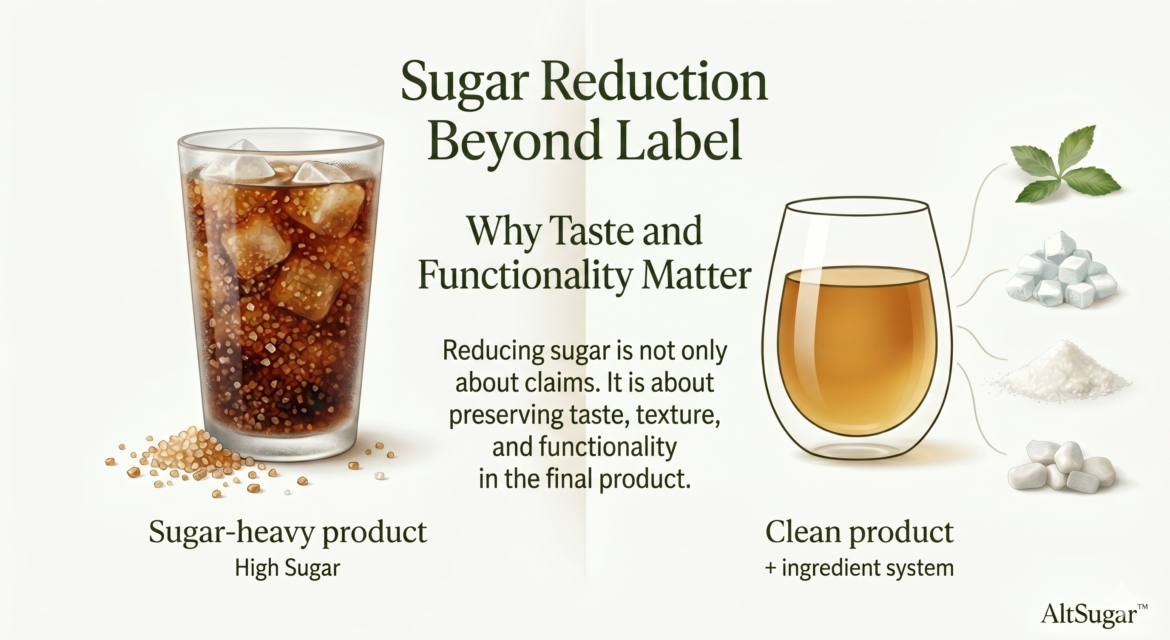
Sugar reduction has moved far beyond “low‑sugar” or “sugar‑free” badges on the front of the pack. For serious food and beverage brands, the real challenge is what happens in the mouth and on the shelf – not just on the label.
Modern consumers expect less sugar but still want great taste, satisfying texture, and familiar mouthfeel. At the same time, brands must retain product stability, clean‑label positioning, and manufacturing efficiency. To meet all of these, sugar reduction must be treated as a formulation‑level innovation, not a cosmetic label tweak.
Why brands are taking sugar reduction seriously
Regulatory pressure, rising sugar‑related taxes, and increasing health awareness are accelerating the shift toward lower‑sugar products. At the same time, global and regional food authorities are tightening rules around nutritional claims, pushing brands to think carefully about how much sugar is actually present.
Beyond regulations, the real driver is consumer behaviour:
- Many shoppers actively try to cut sugar intake.
- They read ingredient lists and expect simpler, more natural‑sounding components.
- They are quick to notice when sugar‑reduced products taste flat, thin, or artificial.
Brands that ignore these expectations often see short‑term “health halo” wins, followed by long‑term taste backlash and loss of repeat purchase.
What sugar does beyond sweetness
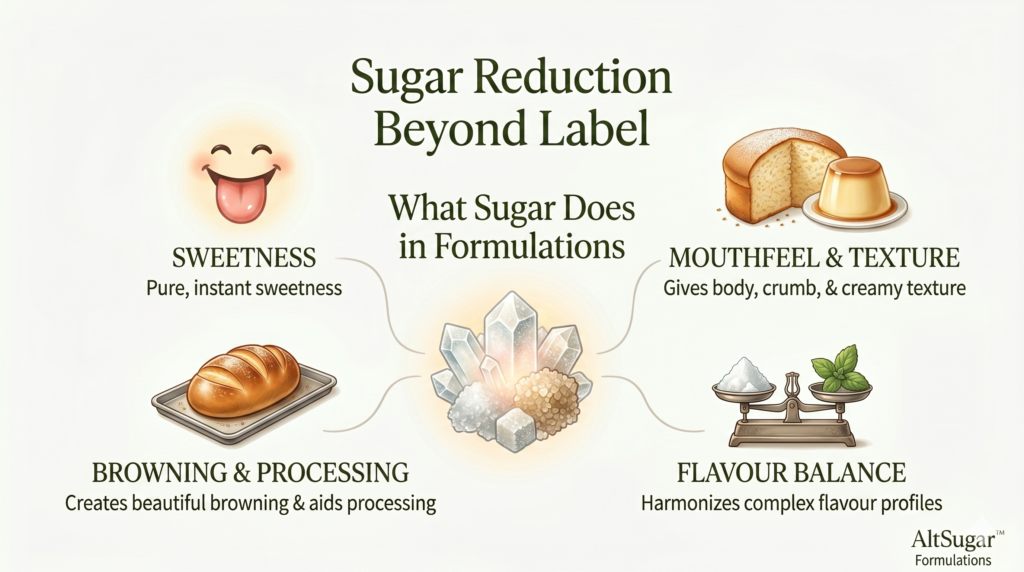
When brands talk about sugar reduction, they often focus only on calories and sweetness. But sugar plays several functional roles in formulations:
- Texture and body: Sugar contributes to viscosity, bulk, and mouthfeel in beverages, dairy, and bakery products.
- Stability and shelf life: It affects water activity, freezing point, and microbial stability in jams, syrups, and frozen desserts.
- Processing behaviour: In bakery and confectionery, sugar influences browning, crust formation, and caramelisation.
- Flavour balance: Sugar helps round out acidity and supports flavour release.
When sugar is reduced or removed, all of these properties can shift – sometimes in ways that are not immediately obvious during bench‑top trials but become clear only after scale‑up or storage.
The gap between “low‑sugar” and “great‑tasting”
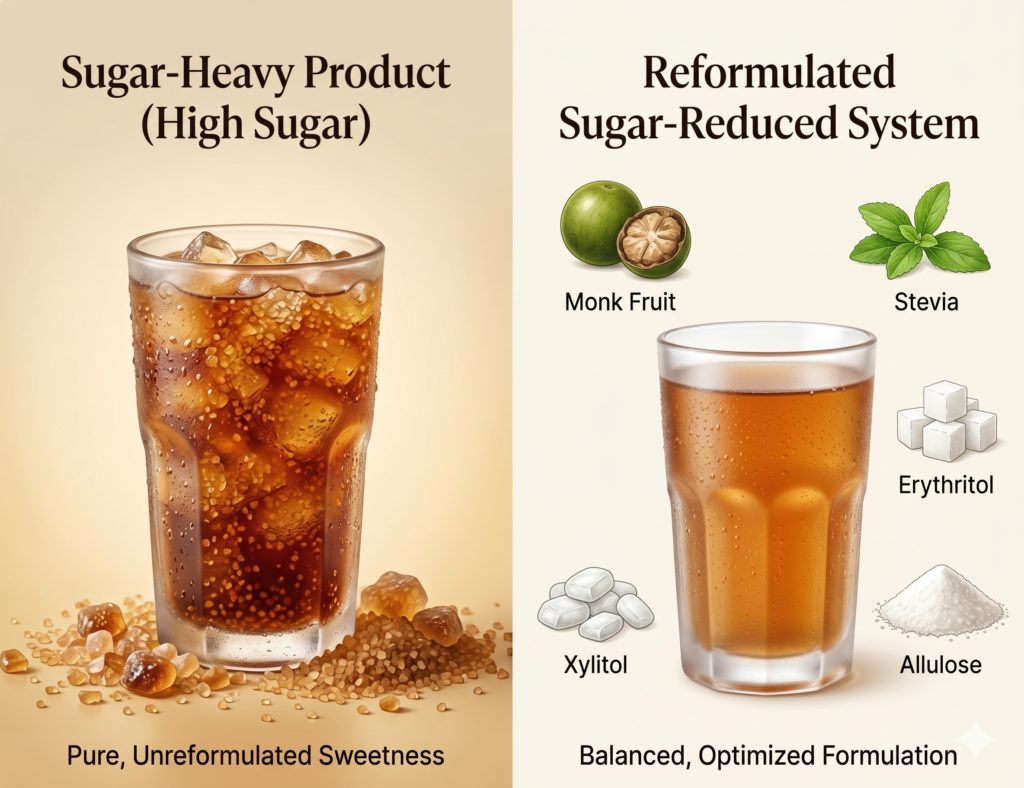
Many brands enter sugar‑reduction projects with a clear numeric target – for example, “reduce sugar by 30%” – but less clarity on how to maintain sensory quality.
In practice, simply replacing sucrose with a single high‑intensity sweetener often leads to:
- Off‑tastes or lingering aftertastes.
- Loss of body and perceived richness.
- Texture changes (e.g., thinness, graininess, or dryness).
- Flavour imbalance, especially in acidic or layered flavour profiles.
This is why clean‑label sugar reduction is not about swapping one ingredient for another. It is about rebuilding the sweetening system to preserve both technical performance and consumer experience.
How taste and functionality are balanced
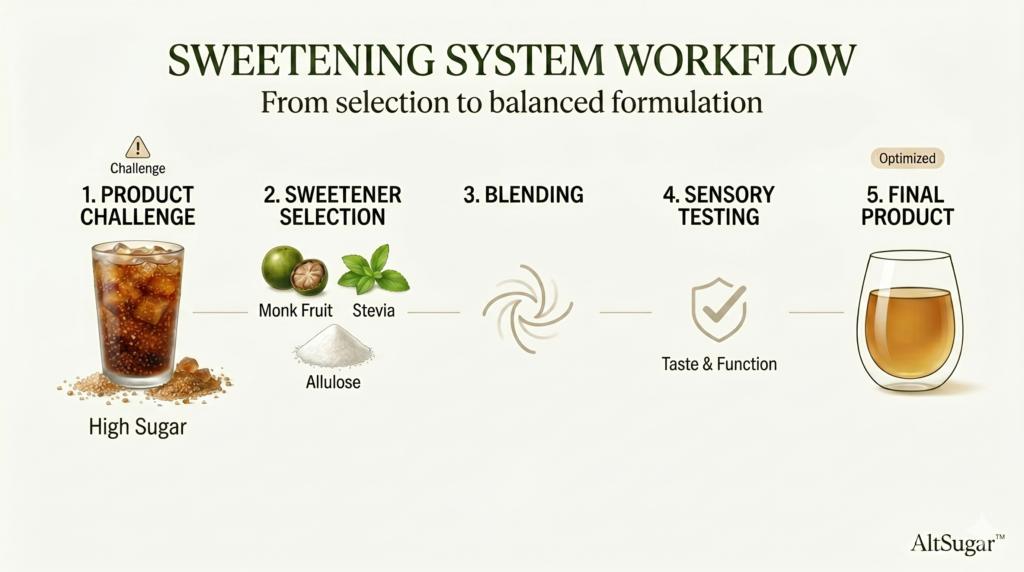
To move beyond label‑driven sugar reduction, brands are increasingly combining:
- High‑intensity sweeteners (such as monk fruit, stevia, erythritol, allulose, and xylitol).
- Bulking and texturising ingredients that support body and mouthfeel.
- Flavour and aroma modulators that help round out sweetness and mask off‑notes.
For example:
- In beverages, brands may use a blend of stevia and erythritol, with subtle aroma support, to maintain sweetness and roundness while cutting sugar.
- In dairy desserts, allulose and fibre‑based bulking agents can help retain creaminess and smoothness.
- In baked goods, allulose and carefully chosen sweetener blends can mimic sugar’s browning and volume while reducing total sugar content.
Each of these approaches requires:
- Clear understanding of sweetness profiles and dose‑response curves.
- Testing under real production conditions.
- Iterative adjustment of sweetness, acidity, fat, and texture.
Clean‑label sugar reduction: expectations and reality
Clean‑label positioning adds another layer of complexity. Many brands want to reduce sugar without introducing artificial‑looking ingredients or hard‑to‑explain names.
In this context, natural, plant‑based sweeteners and bulking systems become more attractive:
- Monk fruit and high‑purity stevia deliver sweetness with minimal caloric impact.
- Erythritol and allulose can provide body and texture while keeping the ingredient list relatively simple.
- Thoughtful blending helps avoid the metallic or bitter notes that once characterised older sweeteners.
The challenge is to balance consumer expectations with formulation feasibility:
- How natural does the ingredient list need to look?
- What level of sweetness and aftertaste is acceptable for the target category?
- Can the chosen system withstand processing, storage, and distribution?
Successful clean‑label sugar‑reduced products are usually the result of collaboration between ingredient suppliers and product developers, not last‑minute ingredient swaps.
Whether you are reformulating a beverage, dairy product, bakery item, or functional food, sugar reduction is most effective when it starts with an understanding of what sugar is doing in the product – and how taste, texture, and functionality can be maintained with the right sweetening system.
If you’re exploring high‑intensity sweeteners for your next sugar‑reduced product, visit the AltSugar™ website to learn more about natural sweetening systems and ingredient options: https://www.altsugar.com